The dining room is fundamentally the heart of human connection within the home. It is the designated space where families gather after a long day, where friends linger over long meals filled with laughter, and where significant milestones are celebrated. Despite its importance, the dining room is frequently one of the most challenging spaces to decorate successfully. Too often, it ends up feeling stiff, overly formal, uncomfortably cramped, or completely neglected, reduced to a dumping ground for mail and laundry. Achieving a dining space that is both exceptionally beautiful and profoundly inviting requires a delicate balance of scale, lighting, texture, and layout. When this balance is off, the room feels disjointed. This comprehensive guide will illuminate the seven most common dining room decor mistakes homeowners make and provide actionable, elegant solutions to rectify them, ensuring your space is as welcoming as it is stylish.
Creating a truly cohesive dining environment means looking beyond just buying a matching table and chair set. In fact, relying on perfectly matched sets is often the first misstep toward a sterile room. Designing a warm, rustic, and cozy dining area involves layering different materials, understanding the critical importance of spatial flow, and mastering the art of illumination. The goal is to craft an atmosphere that encourages people to sit down, relax, and stay a while. By identifying these common decorative pitfalls and applying our expert, rustic-inspired fixes, you can breathe new life into your dining room, transforming it from a neglected, awkward space into the most beloved, comforting gathering spot in your entire home.
Mistake 1: Choosing the Wrong Table Shape for the Room
One of the most foundational errors in dining room design is selecting a table shape that fights against the natural architecture of the room. A massive rectangular table shoved into a small, square room will make the space feel incredibly claustrophobic, forcing guests to squeeze past walls and making the entire dining experience uncomfortable. Conversely, placing a small, round table in the center of a long, expansive rectangular room leaves too much awkward, dead space, making the furniture look completely lost and unanchored. The table is the anchor of the room, and its proportions dictate everything else.
The Fix: Harmonize the table shape with the room’s footprint. If your dining room is distinctly square, a round or square dining table is the most spatially efficient and aesthetically pleasing choice. Round tables are exceptionally cozy, fostering easy conversation as everyone faces the center. For long, narrow rooms, a rectangular or oval table is essential. Oval tables are fantastic for tight spaces because the lack of sharp corners provides better traffic flow. Always ensure there is a minimum of 36 inches (preferably 42 inches) of clearance between the edge of the table and the nearest wall or piece of furniture, allowing ample room for chairs to pull out comfortably.
Mistake 2: Relying on the Dreaded ‘Matching Set’
Purchasing an entire matching dining set straight from a catalog—where the table, chairs, sideboard, and mirror are all crafted from the exact same wood with the exact same finish—is a surefire way to make your dining room look like a generic furniture showroom. This approach lacks personality, visual interest, and the layered warmth characteristic of a well-curated, cozy home. It feels rigid and overly formal, discouraging the relaxed, lived-in vibe that makes a dining space truly inviting.
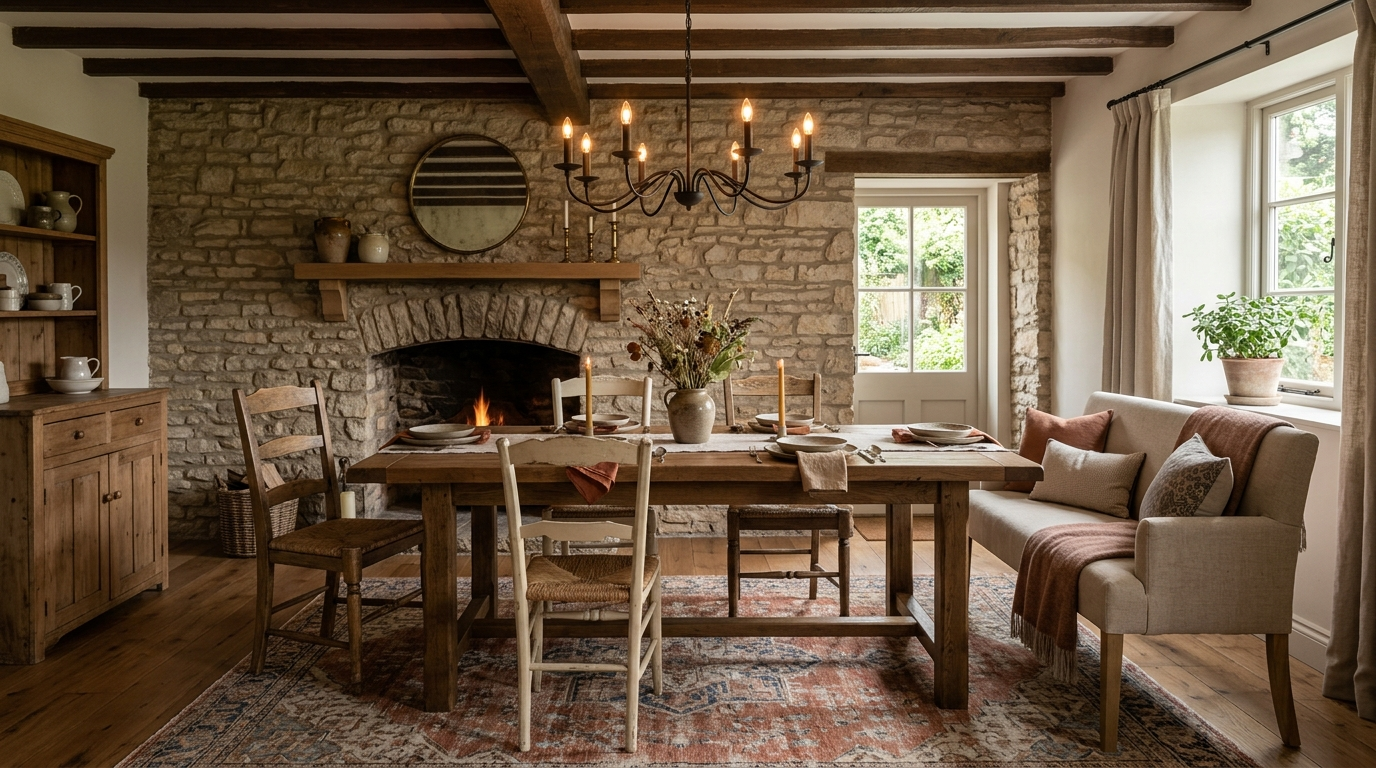
The Fix: Embrace the art of mixing and matching to inject character and rustic charm into the space. Keep the dining table as your solid, foundational piece—perhaps a beautiful, distressed reclaimed wood farmhouse table—but break up the monotony with the seating. Mix a solid wooden table with fully upholstered fabric chairs, cozy slipcovered armchairs at the heads of the table, or even a long, rustic wooden bench on one side. This juxtaposition of hard and soft textures, varied materials, and different silhouettes immediately makes the room feel bespoke, collected over time, and infinitely more welcoming and cozy.
Mistake 3: Incorrectly Sized and Positioned Lighting
Lighting is the single most crucial element in setting the mood of a dining room, yet it is where most people falter. A common mistake is installing a chandelier that is vastly too small for the table, making it look comically disproportionate. Worse still is hanging the fixture too high, pulling the visual energy up to the ceiling and breaking the intimacy of the dining space. Additionally, relying solely on a single, harsh overhead light creates unappealing shadows and a sterile, interrogation-room atmosphere that ruins the dining experience.
The Fix: Scale and placement are everything. The diameter of your chandelier or pendant light should be roughly one-half to two-thirds the width of your dining table. Crucially, the bottom of the light fixture should hang between 30 to 36 inches above the surface of the table. This height brings the light down into the human sphere, creating a warm, intimate glow over the food and the guests’ faces. Furthermore, always install dining room lights on a dimmer switch to control the ambiance, and layer the lighting by adding small, warm lamps to a sideboard or installing wall sconces to create a soft, encompassing, cozy glow.
Mistake 4: Forgetting the Importance of an Anchor Rug
Many homeowners skip the area rug in the dining room out of fear of spills and crumbs. However, leaving a dining table floating on a bare hardwood or tile floor makes the furniture feel disjointed and unanchored. The space lacks warmth, and the acoustics can become harsh and echoey. An even worse offense is buying a rug that is too small, resulting in the back legs of the chairs constantly slipping off the edge of the rug when pulled out, causing frustration and damaging both the rug and the floor.
The Fix: A rug is essential for grounding the dining space and adding a vital layer of cozy texture. The golden rule for dining room rugs is sizing: the rug must be large enough so that all four legs of every chair remain on the rug, even when the chairs are pushed back for someone to stand up. Typically, this means the rug should extend at least 24 to 30 inches beyond all sides of the table. To address practical concerns about spills, opt for a low-pile, highly durable rug material. In a cozy, rustic setting, a natural fiber rug like jute or sisal, or a vintage-wash patterned rug that easily hides small stains, is an absolutely perfect, stylish choice.
Mistake 5: Neglecting the Walls and Vertical Space
Because the dining table commands so much physical space, homeowners often focus entirely on the horizontal plane and completely neglect the vertical space. Leaving the walls bare in a dining room creates a stark, unfinished, and cavernous feeling. A dining room with naked walls lacks acoustic dampening, making conversations loud and echoey, and fails to provide any visual interest or personality to engage guests when they are not looking at their plates.
The Fix: Utilize your walls to add warmth, texture, and character. In a cozy, rustic dining room, consider adding a beautifully textured wall treatment, such as distressed shiplap, wainscoting painted in a warm, moody hue, or a heavily textured grasscloth wallpaper. Hang large, impactful artwork or create a curated gallery wall of vintage botanical prints or family heirlooms. Mirrors are also an excellent addition; placing a large, distressed-frame floor mirror or a substantial wall mirror strategically will reflect the light from your chandelier, instantly making the room feel larger, brighter, and more dynamic.
Mistake 6: Overcrowding the Space with Unnecessary Furniture
In an attempt to maximize storage or display fine china, many people cram large china cabinets, bulky buffets, and rolling carts into dining rooms that simply cannot accommodate them. This overcrowding creates a severe bottleneck effect. When guests have to navigate a maze of bulky furniture just to find their seat, the room feels stressful rather than relaxing. The dining room should feel airy and easy to move through, not like a furniture storage unit.
The Fix: Prioritize breathing room over excessive storage. If your dining room is small, edit your auxiliary furniture ruthlessly. A sleek, narrow console table or a low-profile credenza might be all you need to serve food and store essential linens, without eating into the crucial walkway space. Ensure there is always a clear, unobstructed path around the entire table. If you absolutely need a large storage piece, consider built-in cabinetry painted the same color as the walls to make it recede visually, or move the large, imposing china cabinet to a different, more spacious room in the house to maintain a clean, cozy, and uncluttered dining environment.
Discover 15 incredible cozy living room ideas blending rustic charm with ultimate comfort. Transform your space into a warm, inviting sanctuary you’ll love.
Is your living room feeling a little off? Avoid these common design pitfalls. Learn the easy fixes to transform your space into a stylish and functional haven.
Is your entryway leaving a bad first impression? Learn the most common decor mistakes to avoid and how to design a stunning, functional foyer for your home.
Step into elegance with our ultimate guide to designing a luxury entryway. Discover sophisticated styling tips to create a truly unforgettable first impression.
Discover the most captivating living room trends of the year. Explore expert tips on incorporating earthy palettes, sustainable materials, and cozy textures.