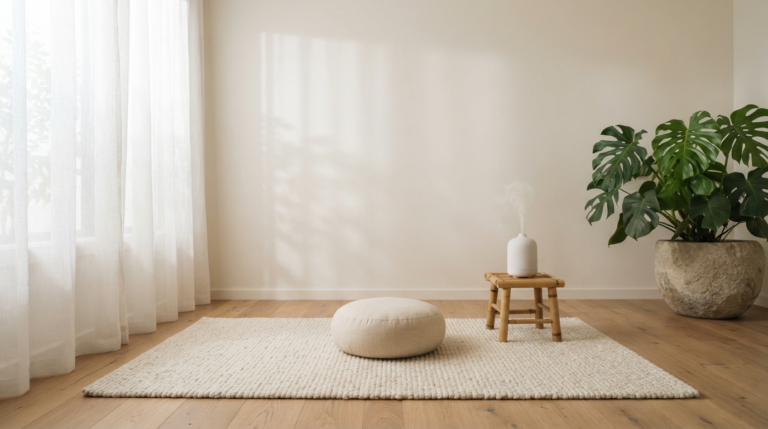
In the relentless pace of the modern world, the bedroom has evolved from a simple place to sleep into a vital sanctuary—a personal retreat where we shed the stress of the day and seek profound restoration. To achieve this level of tranquility, interior design must move beyond mere color palettes and furniture arrangements. The secret to crafting a truly restorative, deeply comfortable bedroom lies in the masterful application of texture. Layering different materials engages our senses on a tactile level, transforming a stark, two-dimensional room into an inviting, three-dimensional cocoon of warmth and safety.
Texture is the defining element that bridges the gap between a room that simply looks nice and a room that feels incredibly good to be in. It is the contrast between the cool, crisp touch of a percale sheet and the heavy, reassuring embrace of a chunky knit throw. It is the visual softness of a velvet headboard against the smooth, matte finish of a painted wall. In this comprehensive guide, we will explore the profound impact of tactile elements and provide you with a detailed, step-by-step approach to layering textures. By the end of this journey, you will know exactly how to cultivate a bedroom that is visually captivating, endlessly comfortable, and undeniably serene.
The Psychology of Texture in Interior Spaces
Before diving into specific materials, it is crucial to understand why texture matters so immensely in a bedroom environment. As humans, we are highly tactile creatures. Our environment influences our nervous system, and the surfaces we touch—or even just perceive visually—can either stimulate or soothe us. Smooth, hard, and shiny surfaces, such as glass, metal, or high-gloss lacquer, tend to feel cold and energizing. They reflect sound and light, which can create an atmosphere of clinical efficiency rather than relaxation. While a few of these elements can provide necessary contrast, an overabundance of them will leave a bedroom feeling harsh and uninviting.
Conversely, soft, rough, and matte textures absorb both light and sound. Materials like natural linen, brushed cotton, woven wool, and unvarnished wood communicate warmth, safety, and grounding energy. When you step onto a plush, high-pile rug, or run your hand over a slubby linen duvet, your brain receives signals of comfort. Layering these comforting textures creates an acoustic and visual softness that dampens the harshness of the outside world, effectively lowering the heart rate and preparing the mind for deep sleep. The goal in the bedroom is to prioritize these absorbing, comforting materials to create an atmosphere of utter calm.
Step 1: Establishing the Foundation with Floor Coverings
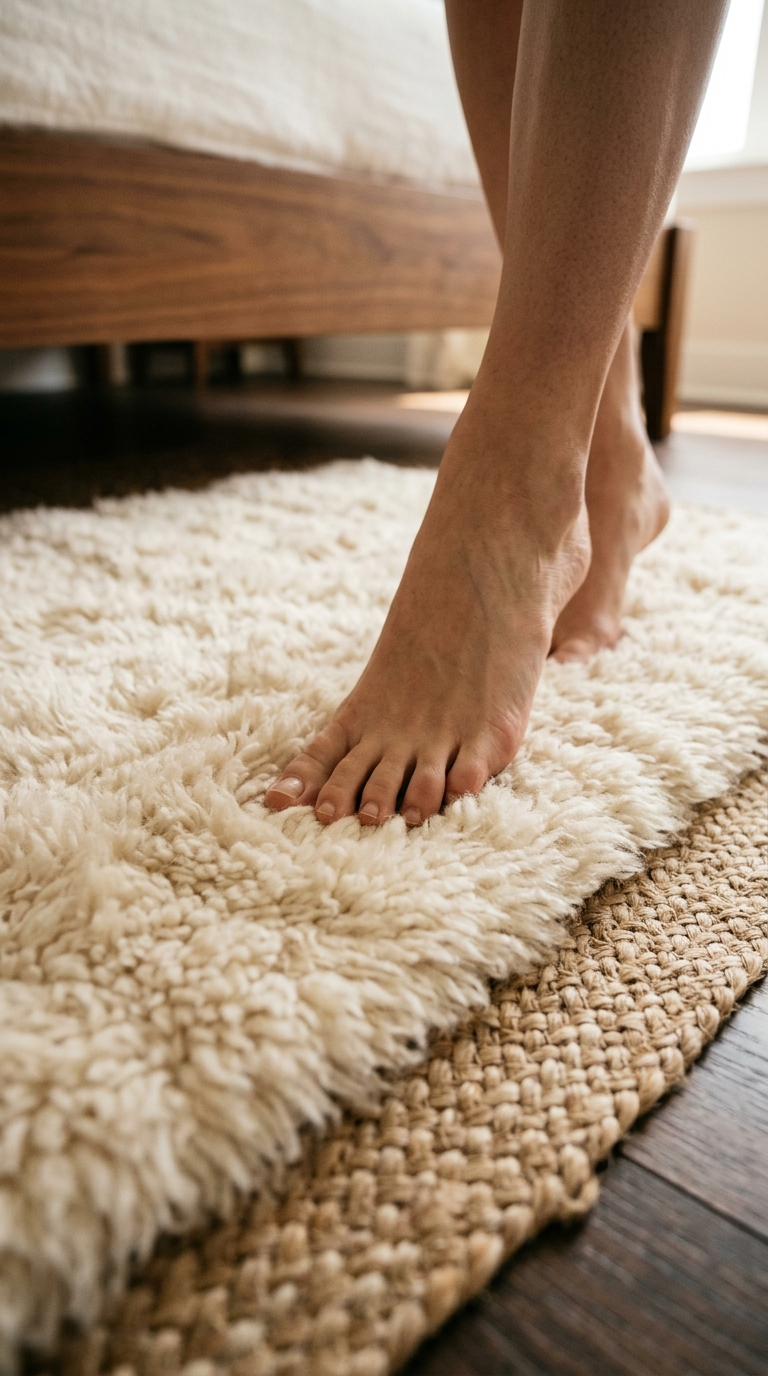
The journey to a textured sanctuary begins from the ground up. Hardwood or polished concrete floors, while beautiful and easy to clean, can be visually cold and acoustically harsh. The first, and arguably most important, layer of texture in a bedroom is the rug. A large, generously sized rug anchors the space and provides the first physical touchpoint when your feet hit the floor in the morning. Do not skimp on size; the rug should extend significantly beyond the sides and foot of the bed, ensuring you never step onto a cold floor.
When selecting a rug for the bedroom, prioritize pile and material. Wool is an exceptional choice due to its natural warmth, durability, and luxurious feel underfoot. A Moroccan Beni Ourain-style rug, with its deep, shaggy pile and organic geometric patterns, adds immense visual depth and incredible softness. Alternatively, a tightly woven jute or sisal rug can introduce a grounding, earthy texture, but be sure to layer a smaller, softer rug—like a faux sheepskin—over it near the bed for ultimate comfort. The contrast between the rough natural fibers and the plush overlay is a perfect example of successful textural layering.
Step 2: Dressing the Bed – The Ultimate Textural Canvas
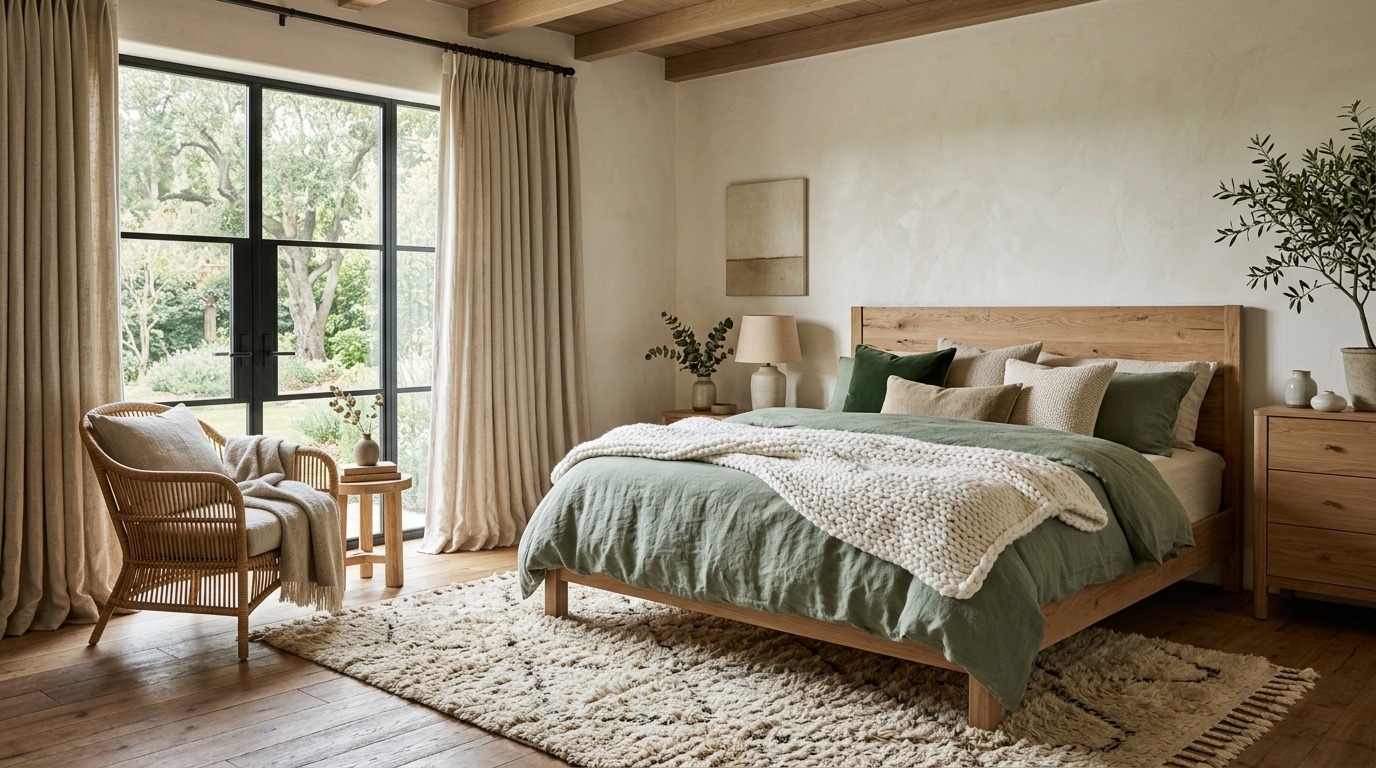
The bed is the undeniable focal point of the room and presents the greatest opportunity for magnificent textural expression. Achieving the “cloud-like” aesthetic seen in luxury hotels and designer magazines requires multiple layers of contrasting fabrics. Start with your base layer: the sheets. Here, you must choose based on your personal sleeping temperature. Crisp cotton percale offers a cool, matte finish, while sateen provides a smooth, subtle sheen. For ultimate textural appeal, pure European flax linen is unmatched. Linen possesses a beautiful, slightly rumpled, organic look that screams effortless comfort, and its thermoregulating properties make it perfect year-round.
Once the base is set, add weight and volume. A lofty, high-quality down or down-alternative duvet insert is essential. Cover it with a duvet cover that contrasts slightly with your sheets—perhaps a waffle-weave cotton over smooth percale, or a heavily textured linen over a simple cotton sheet. Finally, finish the foot of the bed with a heavy throw or a folded quilt. This is where you can introduce a dramatically different texture. A chunky, hand-knit merino wool blanket, a luxurious faux-fur throw, or an intricately stitched Kantha quilt adds an element of visual weight and an invitation to curl up and relax.
Step 3: Softening the Architecture with Window Treatments
Windows are hard, reflective surfaces that can easily disrupt the softness of a bedroom if left untreated. Window coverings are not merely functional items for blocking out morning light; they are crucial vertical planes of texture that can dramatically alter the acoustics and mood of the space. While severe plastic blinds or stark roller shades serve a purpose, they do nothing to enhance the sanctuary aesthetic. Instead, you should aim for layers of fabric that add movement and softness to the room’s architecture.
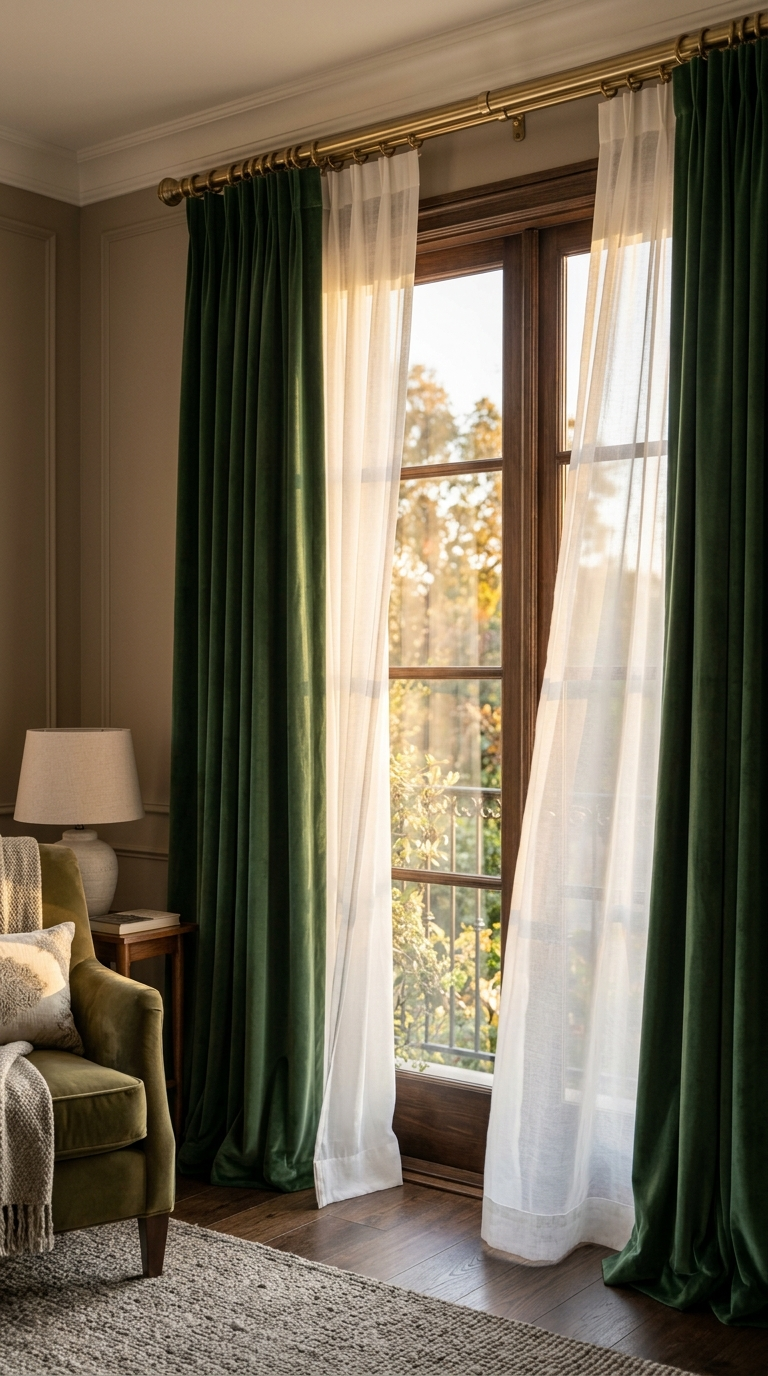
A classic and highly effective approach is to pair light-filtering sheer panels with heavier, blackout drapery. The sheer layer, perhaps made of a gauzy, lightweight linen or a soft cotton voile, provides daytime privacy while diffusing harsh sunlight into a gentle, ethereal glow. The outer layer, designed to block light completely, should be crafted from a substantial, rich fabric. Heavy velvet, thick woven linen, or even a soft suede are excellent choices. When hung close to the ceiling and allowed to pool slightly on the floor, these substantial drapes add an incredible sense of luxury, height, and acoustic dampening to the bedroom.
Step 4: Introducing Natural Elements and Hard Textures
While softness is the primary goal, a bedroom composed entirely of plush fabrics can ironically feel overwhelming and visually flat. To make the soft textures truly stand out, they must be juxtaposed against contrasting, harder elements. This is the principle of balance. Incorporating natural materials brings a grounding, organic quality to the space, reminding us of the outdoors and providing crucial visual relief from the sea of textiles.
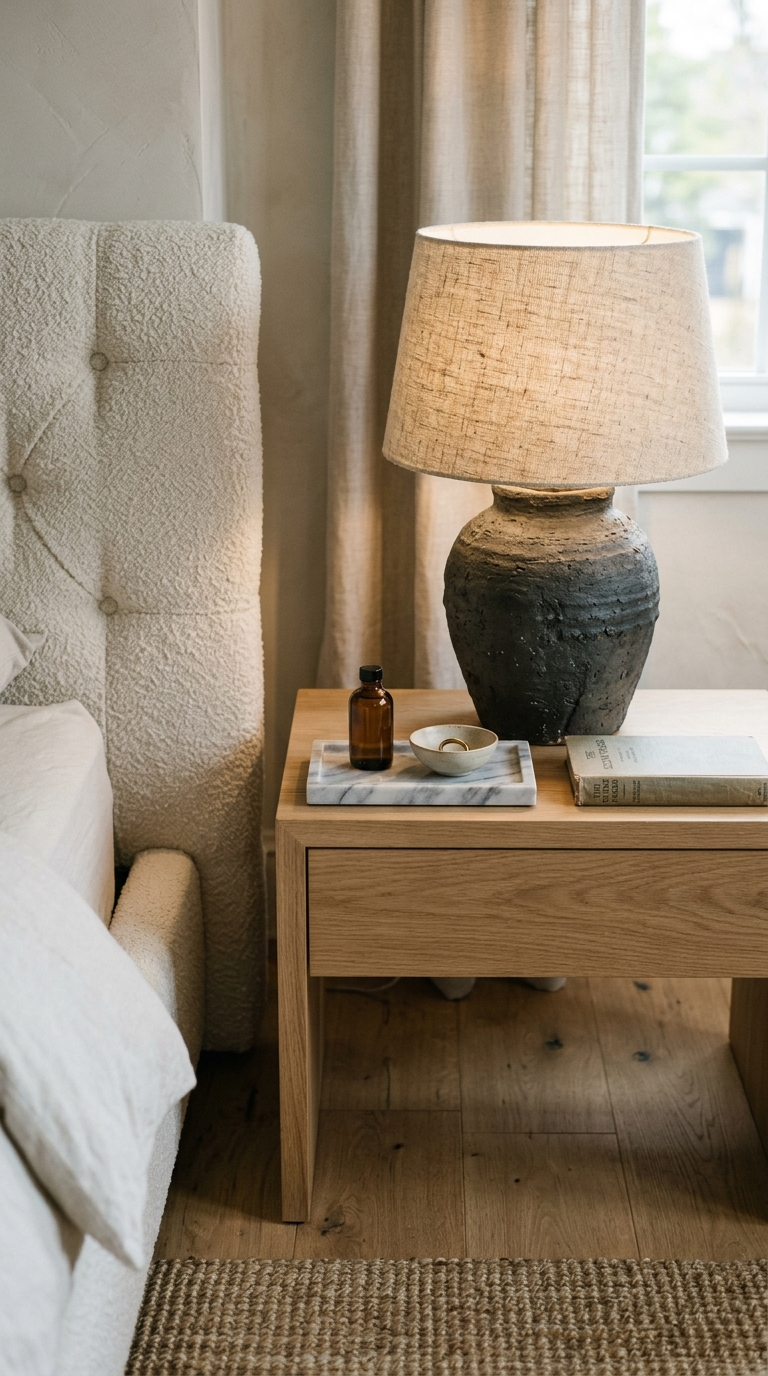
Wood is perhaps the most important hard texture to include. A solid wood bed frame, whether it is smooth, polished walnut or rough-hewn, reclaimed oak, adds immense warmth and character. Rattan and wicker are also fantastic ways to introduce a woven, structural texture—consider a rattan accent chair in the corner or a woven basket for holding extra blankets. Additionally, subtle metallic accents can provide a necessary touch of gleam. A pair of brushed brass reading lamps, a textured ceramic vase on the nightstand, or a small stone tray for jewelry all add complex, tactile points of interest without compromising the room’s overall tranquility.
Step 5: The Tactile Power of Upholstery and Pillows
Upholstered furniture acts as a bridge between the architecture of the room and the softness of the bed. An upholstered headboard, for instance, immediately makes the bed feel more substantial and inviting. Choosing a fabric like bouclé, velvet, or a heavy tweed for the headboard adds a massive expanse of touchable texture right where you rest your head. If space allows, introducing an upholstered bench at the foot of the bed or a cozy reading armchair in a corner further expands the soft landscape of the room.
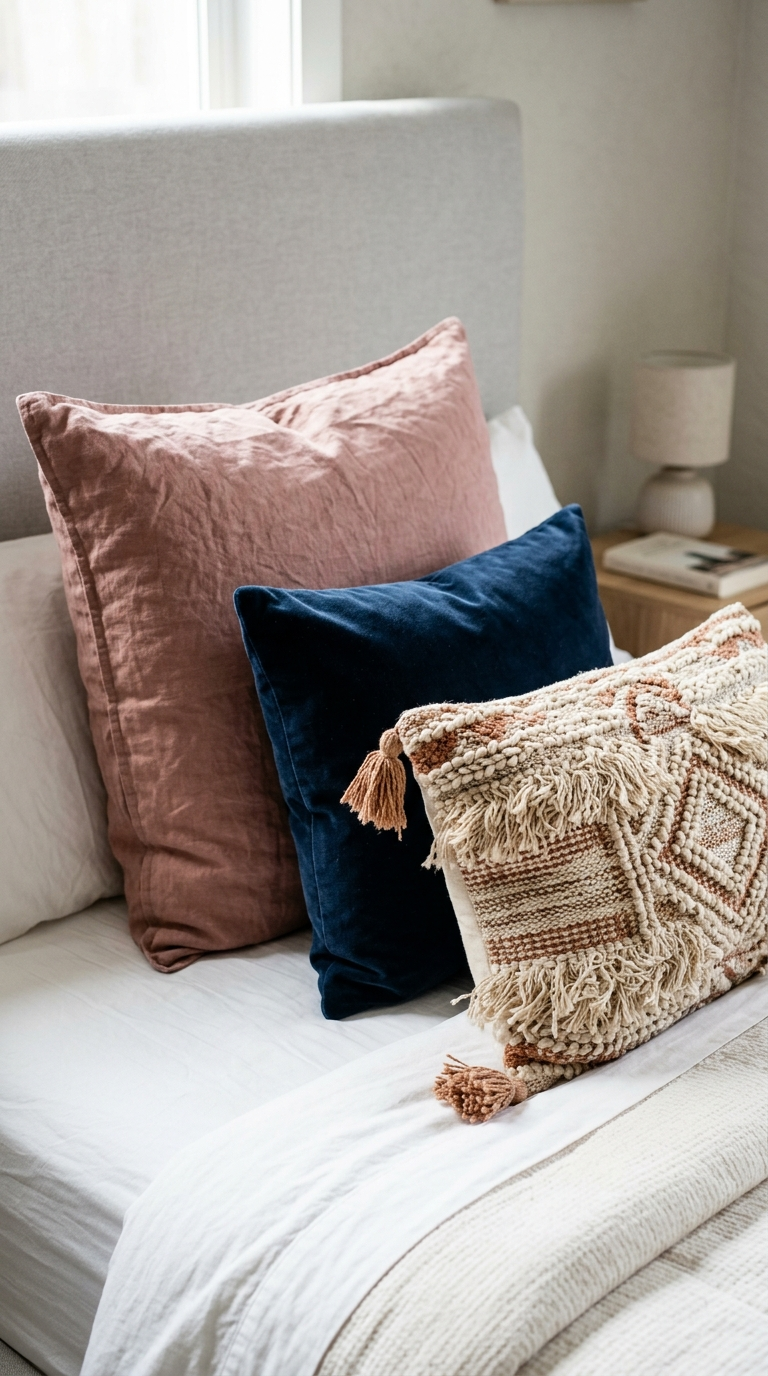
Throw pillows are the easiest and most versatile way to inject diverse textures. Rather than matching your pillows perfectly to your duvet, treat them as a collection of varied tactile experiences. Mix and match materials fearlessly: pair a smooth silk or velvet lumbar pillow with a pair of rough, woven linen squares. Add a pillow with heavy embroidery, tassels, or a sheepskin cover. By combining 3 to 5 pillows of varying sizes and distinct textures, you create a deeply inviting, lived-in aesthetic that begs you to dive right in.
Step 6: Lighting as a Visual Texture
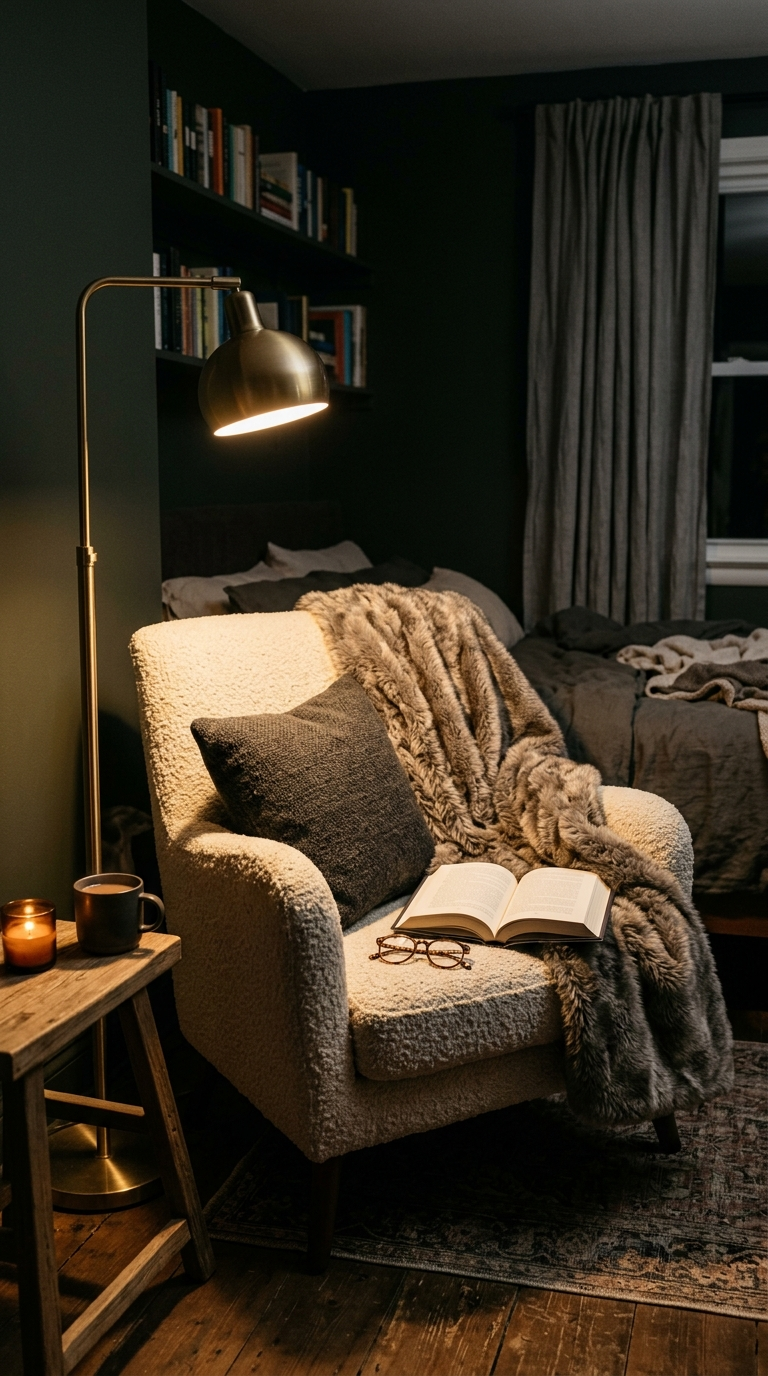
We often think of texture strictly in terms of physical touch, but light itself possesses a profound visual texture. The way light interacts with the surfaces in a room changes everything. A bright, cool, overhead light flattens textures, making even the most luxurious velvet look cheap and two-dimensional. Conversely, warm, diffused, and angled light highlights the weave of fabrics, the grain of wood, and the variations in color, bringing the room to life.
To maximize the textural impact of your bedroom, eliminate reliance on a single overhead fixture. Instead, rely on multiple, lower-level light sources. Bedside table lamps with fabric shades (like linen or raw silk) diffuse the bulb’s glare and cast a soft, warm glow across the textured bedding. Wall sconces placed strategically can wash light down textured wallpaper or across a wooden headboard, highlighting the material’s depth. Always use warm-white bulbs (around 2700K) and install dimmer switches wherever possible. The ability to control the intensity of the light allows you to dial in the perfect, moody atmosphere, enhancing the cozy, textured feel of the sanctuary.
Embracing Imperfection: The Key to Authentic Comfort
As you layer these various textures, it is vital to remember that true comfort rarely looks perfectly pristine. A bedroom that resembles a tightly staged showroom can feel stiff and unapproachable. The goal of layering textures is to create a space that looks lived-in, loved, and undeniably welcoming. Embrace the natural wrinkles of linen sheets; do not obsess over ironing them flat. Allow the chunky throw blanket to drape naturally over the edge of the bed rather than folding it with military precision.
Let the organic variations in natural wood grains or hand-woven rugs shine. These slight imperfections are what give a room its soul. When materials are allowed to exist in their natural state, they communicate an effortless elegance that puts the mind instantly at ease. The textural sanctuary is not about achieving rigid perfection; it is about cultivating an environment that physically and visually wraps you in comfort the moment you cross the threshold.
Conclusion: Your Personal Textural Oasis
Mastering the art of layering textures is the most profound way to elevate your bedroom from a simple sleeping quarter to a deeply restorative sanctuary. By thoughtfully combining the plush warmth of wool rugs, the organic breathability of linen bedding, the structural contrast of natural wood, and the enveloping softness of heavy drapery, you create a multisensory experience that actively promotes relaxation and well-being. It is a design approach that appeals to our fundamental human desire for comfort and safety.
Remember to build your layers methodically, starting with the floor and moving upward, ensuring a balanced mix of soft and hard, matte and shiny, smooth and rough. Pay close attention to how your lighting interacts with these surfaces, and never underestimate the power of an imperfectly draped blanket. Take your time curating these materials, selecting pieces that you genuinely love to touch. As your textural landscape grows, so too will the overwhelming sense of peace and tranquility within your space, granting you the ultimate bedroom sanctuary you deserve.
Struggling to focus? You might be making these critical home office design mistakes. Learn how to optimize lighting, layout, and decor for a productive space.
Discover imaginative and whimsical DIY projects to transform your child’s nursery into a magical wonderland. Easy steps for creating personalized kids spaces.
Discover the ultimate cozy bedroom ideas to elevate your personal space. Create a tranquil, relaxing retreat with these essential styling and decor tips.
Transform your workspace with these clean, minimalist home office ideas. Discover how to boost productivity while keeping your space stylish and clutter-free!
Discover how to transform any corner of your home into a tranquil wellness sanctuary. Follow this comprehensive step-by-step guide to minimalist relaxation.
Discover seventeen transformative bedroom decor ideas to create a serene, restful sanctuary. Elevate your sleep space with these expert design strategies.