
Having a small apartment balcony doesn’t mean you can’t enjoy a beautiful outdoor space. In fact, tiny balconies offer a unique opportunity to create a cozy, intimate retreat that acts as an extension of your home. The challenge, of course, lies in the limited footprint. How do you incorporate plants, seating, and ambiance without making the space feel cluttered or unusable? This guide will show you exactly how to transform your small balcony into a lush garden oasis. We’ll cover everything from plant selection and vertical gardening to choosing the right furniture and adding cozy details, providing you with a step-by-step plan for maximizing every square inch of your outdoor space.
Step 1: Start with a Plan and a Clean Slate
The first and most important step is planning. Measure your balcony precisely and sketch a rough layout. Consider how you want to use the space. Is it primarily for drinking coffee in the morning, reading a book, or growing herbs? Your goals will dictate your furniture and plant choices. Clear the balcony of all existing items and give it a thorough clean. This ‘clean slate’ approach allows you to see the true potential of the space and prevents you from simply working around existing clutter. Remember to check your building’s rules and regulations; some have restrictions on hanging items or the types of furniture allowed.
Also, assess your environmental conditions. Which direction does your balcony face? How many hours of direct sunlight does it receive? Are you in a windy spot? Knowing your ‘microclimate’ is crucial for selecting plants that will thrive. For instance, sun-loving plants like lavender and succulents will struggle on a shady, north-facing balcony, while ferns and hostas will flourish there. This initial planning phase saves time and money, ensuring your investments in furniture and plants are well-suited to your specific space.
Step 2: Go Vertical to Maximize Space
When floor space is limited, the only way is up! Vertical gardening is a game-changer for small balconies. Utilize your walls, railings, and even the ceiling to add greenery. Wall-mounted planters, pocket gardens, and stacked planters are all excellent options. You can also install a trellis and grow climbing plants like jasmine, ivy, or clematis to create a beautiful ‘living wall’ that adds privacy and ambiance. Railing planters are a staple; they keep the floor clear while displaying beautiful trailing plants or herbs like thyme and rosemary.
Consider a freestanding vertical planter or a ladder shelf. These provide multiple levels for pots of varying sizes, allowing you to create a lush, tiered effect that makes a big impact without taking up much floor space. Choose plants with different growth habits to add interest—mix trailing plants that spill over the edges with upright plants that add height. This layered approach not only looks beautiful but also creates a more intimate and secluded feeling on your small balcony.

Step 3: Select Smart, Small-Scale Furniture
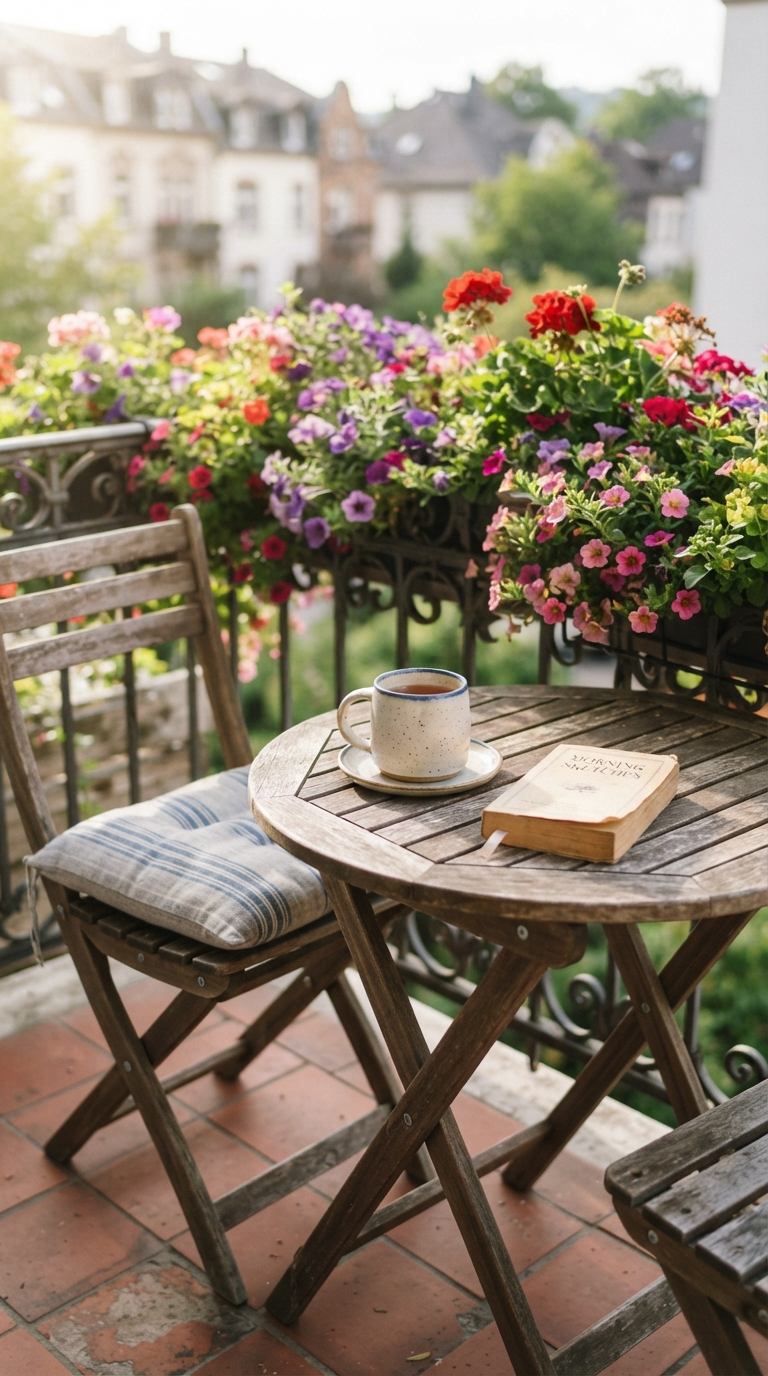
When it comes to balcony furniture, scale is everything. Avoid bulky items that will overwhelm the space. Instead, look for slim, sleek, or transparent furniture that creates a visual lightness. Bistrot sets (a small table and two chairs) are a classic for a reason; they offer a cozy spot for dining without taking up too much room. Look for sets that fold, allowing you to easily clear the space when needed. A semi-circular or ‘half’ table that sits flush against the railing is a fantastic space-saver.
Multi-functional pieces are also highly valuable. Consider a storage bench that provides seating while hiding gardening supplies, soil, and tools. An ottoman that can serve as a footrest, extra seating, or even a small side table is another smart choice. Don’t be afraid to think creatively. A beautiful wooden plank can be mounted on the railing to create a slender bar or countertop, perfect for enjoying a drink while looking at the view. The goal is to maximize functionality while minimizing visual and physical clutter.

Step 4: Create a Cozy Foundation with Flooring and Rugs
Balcony floors are often boring concrete. Elevating the flooring can instantly make the space feel more cozy and like an actual room. Interlocking deck tiles are a popular and renter-friendly option. They come in various finishes, like wood or composite, and are easy to install without tools. These tiles provide a clean, warm look that immediately transforms the space. If you want a softer feel underfoot, consider an outdoor rug.
Outdoor rugs add color, pattern, and texture, effectively defining the seating area. Choose a durable material like polypropylene or jute that can withstand the elements. When selecting a pattern, consider the scale of your balcony. A large-scale pattern can make the space feel larger, while a detailed pattern adds interest. The right flooring creates a sense of comfort and cohesion, making your tiny balcony feel less like an afterthought and more like an intentional, inviting space.

Step 5: Layer in Cozy Textiles and Ambient Lighting
Now for the fun part: adding the details that make the space truly cozy. Textiles are your best friend here. Layer on comfortable outdoor cushions and throws. A soft throw blanket is perfect for chilly evenings, while plush cushions can make even the simplest bistro chair feel luxurious. Opt for fabrics designed for outdoor use that resist water and fading. Mix and match patterns and textures to create a relaxed, bohemian vibe, or stick to a simpler, more uniform look for a minimalist feel.
Step 6: Master Ambient Balcony Lighting
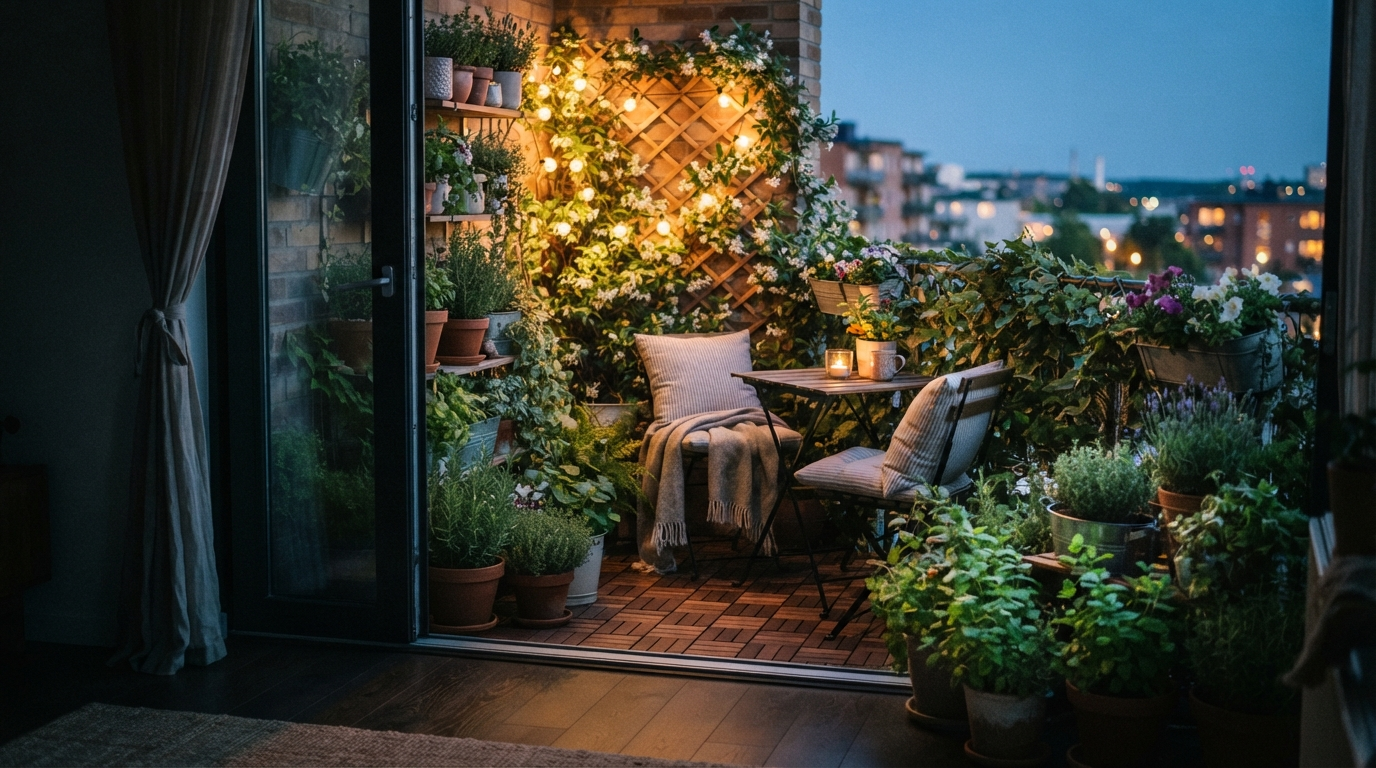
Lighting is paramount in creating a magical atmosphere after the sun goes down. In a small balcony garden, soft, ambient light is key. String lights (like fairy lights or larger Edison bulbs) are a classic and versatile option. Drape them along the railing, weave them through your plants, or hang them across the space to create a ‘canopy of light’. Solar-powered lights are fantastic for balconies without an outdoor outlet; they turn on automatically and come in various styles, including lanterns and spotlights for illuminating key plants.

LED candles in various sizes are another wonderful way to add a warm, flickering glow without the safety concerns of real flame. Consider a small, solar-powered lamp for your table. Lanterns (whether solar, battery-powered, or simple vessels for candles) add a beautiful decorative touch and create a soft, inviting light. The key is to avoid harsh, overhead lights in favor of multiple, soft light sources that create a cozy and inviting environment.