Have you ever walked into your home after a long, exhausting day and felt an immediate wave of overwhelming stress instead of the relaxing comfort you truly deserve? The culprit behind this anxiety is often the visual clutter that subtly takes over our living spaces. Home organization is not just about making your house look like a pristine page out of an interior design magazine; it is fundamentally about reclaiming your peace of mind, saving valuable time, and creating an environment that actively supports your daily routines. When every single item in your household has a designated, logical place, you eliminate the frantic morning searches for misplaced keys, the frustrating struggles with overflowing closets, and the constant feeling that your chores are never truly finished. In this comprehensive, deep-dive guide, we are going to explore sixteen profoundly effective, easily actionable, and aesthetically pleasing home organization ideas that will help you declutter your space forever. We will break down strategies for every zone of your home, from the chaotic entryway to the deepest, darkest corners of your kitchen pantry, ensuring that no space is left untouched by the magic of proper organization. By implementing these meticulously curated systems, you will transform your home from a source of stress into a serene, highly functional sanctuary.
1. The Power of the ‘One In, One Out’ Rule
Before we even begin talking about buying shiny new storage bins or custom shelving units, we must address the root cause of clutter: the continuous accumulation of stuff. The ‘One In, One Out’ rule is a foundational principle of minimalist living and sustainable home organization. The concept is remarkably simple yet transformative: for every new item you bring into your home, an older, similar item must be donated, sold, or recycled. If you buy a cozy new winter sweater, an older sweater that you haven’t worn in years needs to go. If you purchase a new kitchen gadget, an obsolete one must leave the premises. This rule forces you to become highly intentional about your purchases. It makes you pause and ask yourself if you truly need the new item and if you are willing to part with something else to accommodate it. Over time, this practice naturally halts the endless cycle of accumulation, keeping your inventory stable and preventing your newly organized spaces from reverting to their previously cluttered state.
Implementing this rule requires discipline, especially in the beginning. It is highly recommended to keep a dedicated donation box in a convenient location, such as the bottom of your closet or in the garage. Whenever you realize you are holding onto something out of guilt or vague ‘just in case’ reasoning, immediately place it in the donation box. Once the box is full, drop it off at your local charity. The psychological relief of letting go of unnecessary possessions is immense, and it clears both physical and mental space for the things that truly matter in your life.
2. Master the Entryway Drop Zone
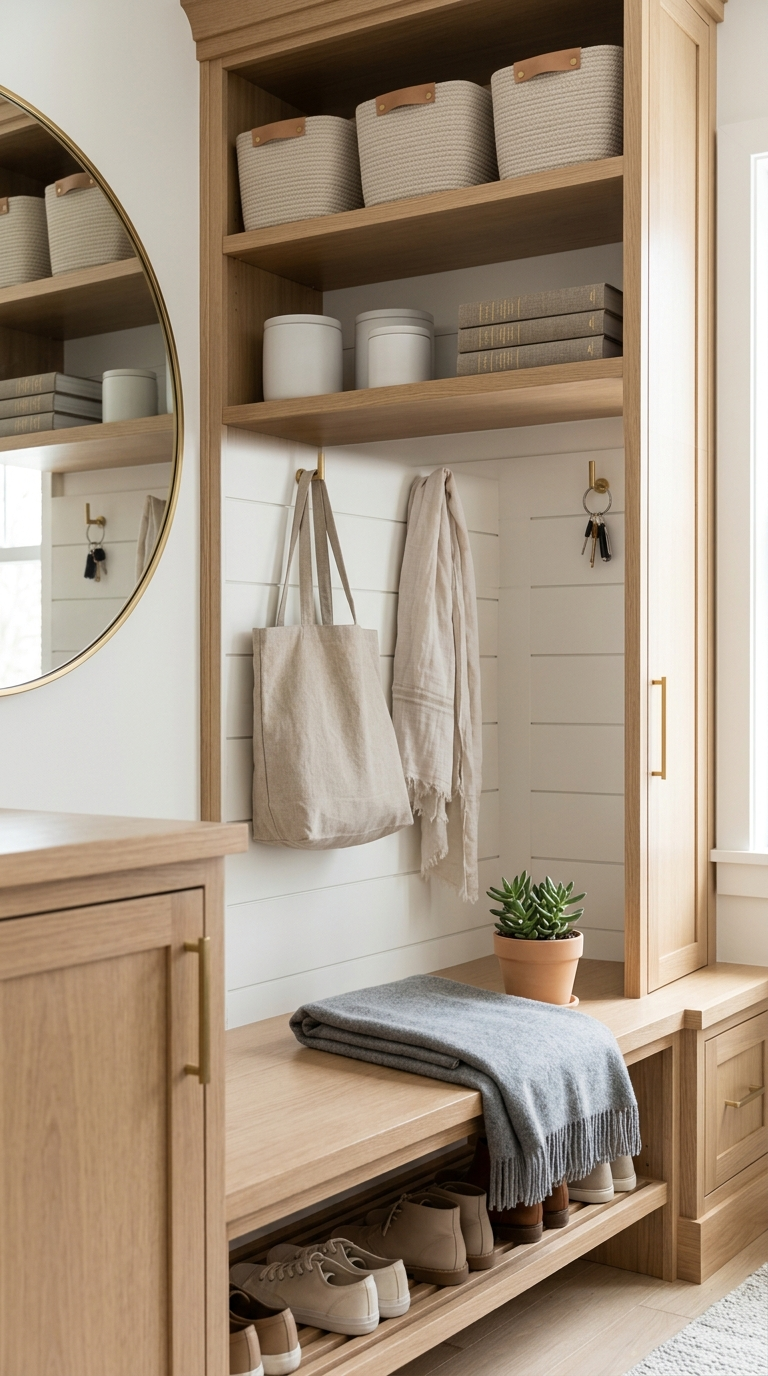
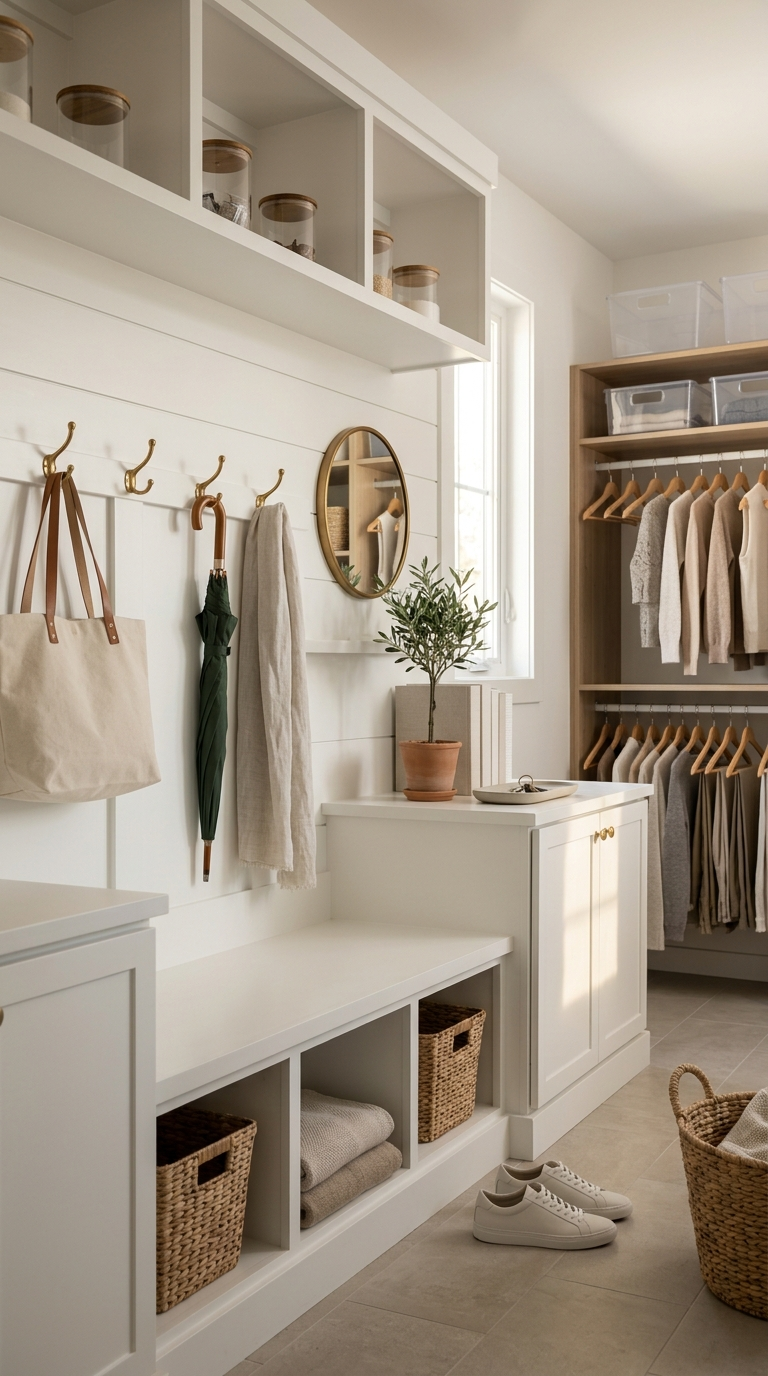
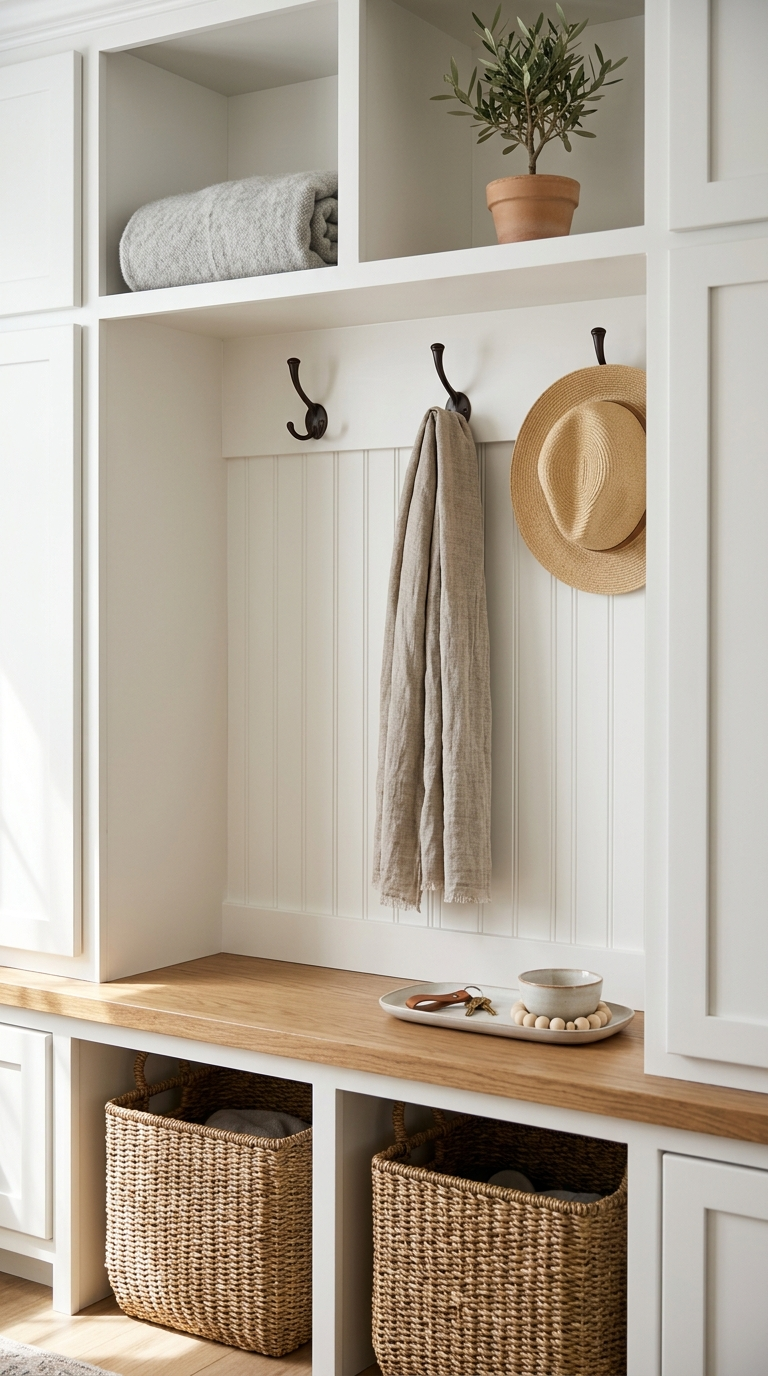
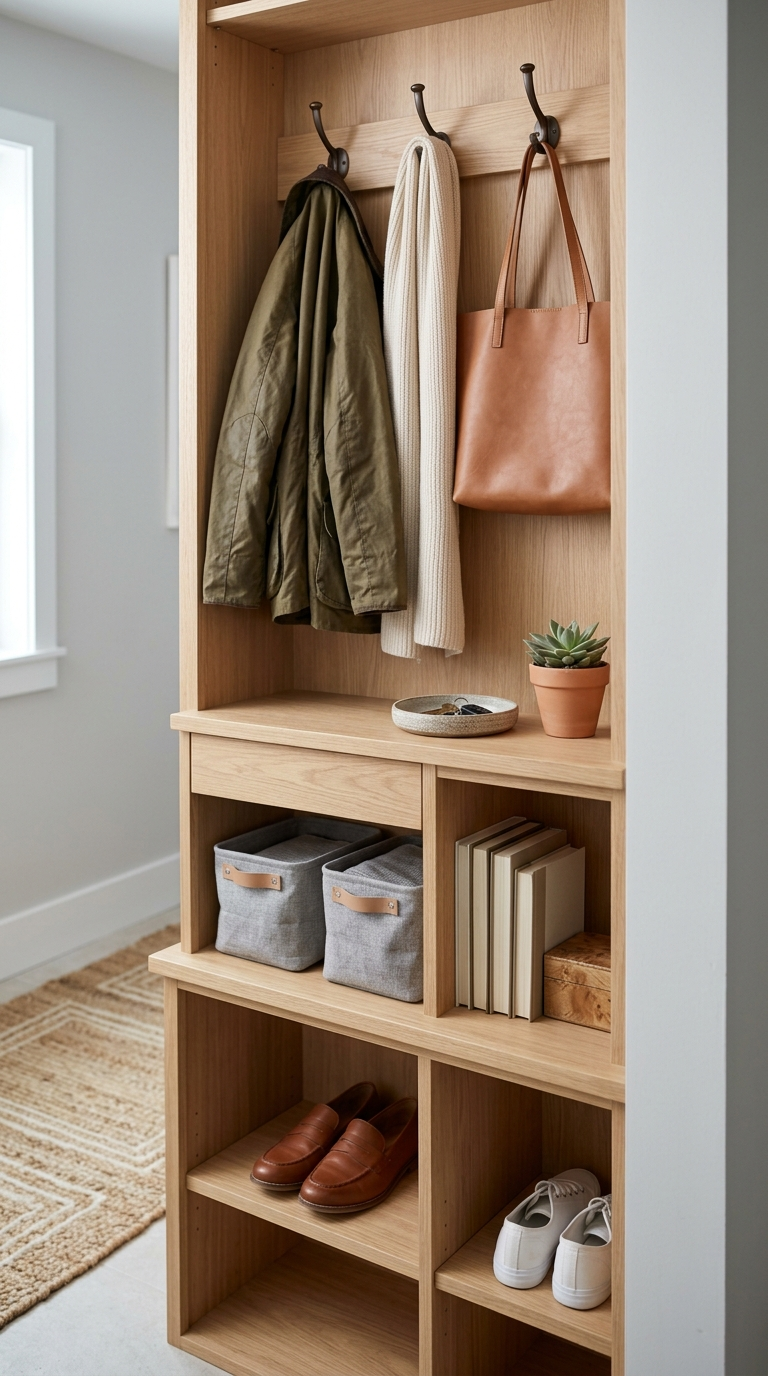
The entryway is the crucial transition point between the chaotic outside world and your private sanctuary. If this area lacks a dedicated organizational system, the clutter from the outside—mail, shoes, coats, bags, umbrellas—will inevitably bleed into your living room and kitchen. Establishing a highly functional ‘drop zone’ is critical. Start by assessing what items naturally pile up near your front door. If shoes are the main offender, invest in a sturdy, multi-tiered shoe rack or a stylish storage bench with hidden compartments. A bench not only hides the footwear but also provides a comfortable place to sit while putting shoes on or taking them off.
Next, tackle the vertical space. Install heavy-duty hooks for coats, scarves, and bags. Assign a specific hook to each family member to foster a sense of personal responsibility. For smaller items like keys, wallets, and sunglasses, a floating shelf with a beautiful decorative bowl or a dedicated wall-mounted organizer is essential. Do not forget to incorporate a system for incoming mail. A simple wall-mounted sorter with slots for ‘Action Required,’ ‘To File,’ and ‘Outgoing’ will prevent paper clutter from migrating to your kitchen counters. By creating a specific home for everything the moment you walk through the door, you immediately stop clutter in its tracks.
3. Revolutionize Your Kitchen Pantry with Zones
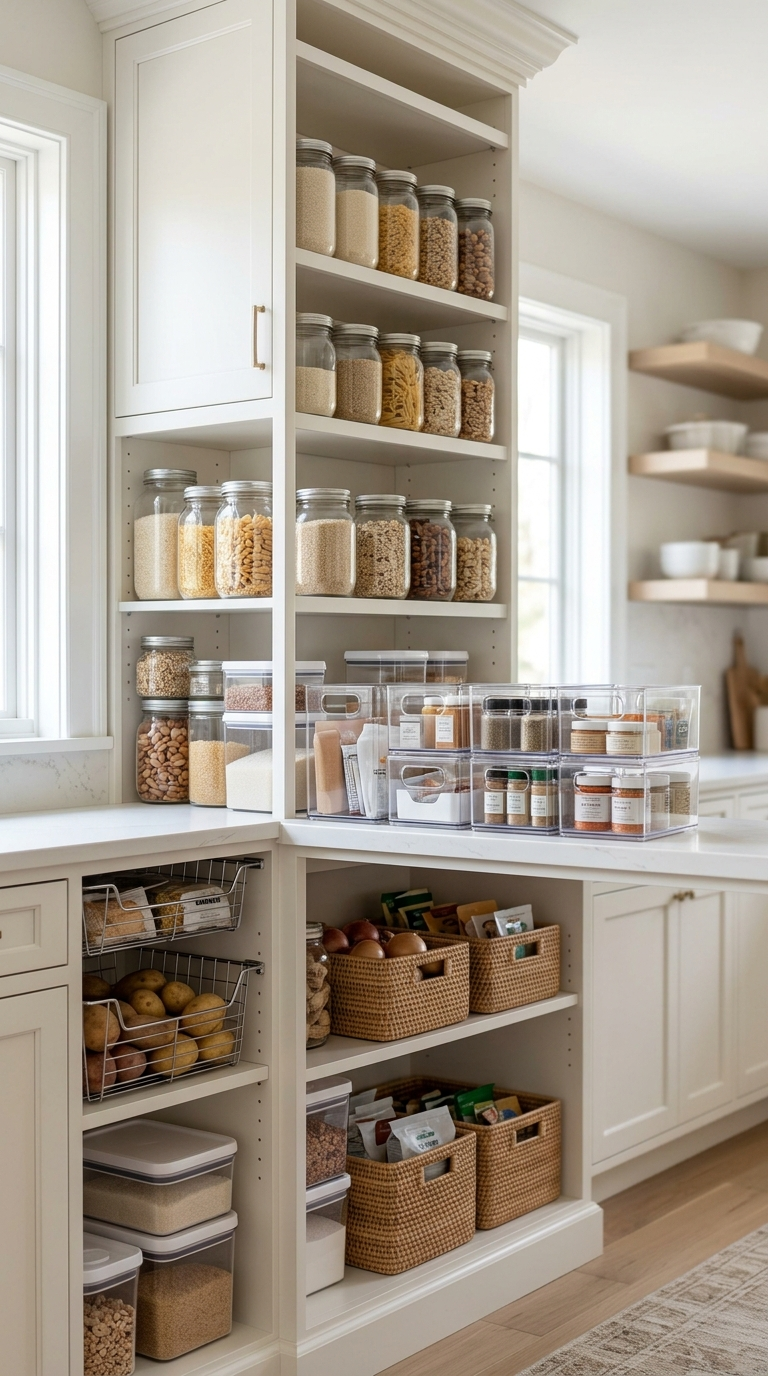
The kitchen pantry is notoriously one of the most difficult areas to keep organized because its contents are constantly changing. The secret to a perpetually tidy pantry is creating distinct, rigidly defined zones based on food categories and how frequently you use them. Begin by completely emptying your pantry. Wipe down the shelves and check expiration dates, ruthlessly discarding anything that is stale or no longer edible. Once you have a clean slate, start categorizing your remaining items: baking supplies, canned goods, pasta and grains, breakfast items, and snacks.
Assign specific shelves or areas to each category. Place heavy items, like bulk bags of flour or large jugs of cooking oil, on the sturdy bottom shelves. Keep frequently used items, such as breakfast cereals and daily snacks, at eye level for easy access. Reserve the highest, hardest-to-reach shelves for overstock items or appliances you only use occasionally. To elevate the organization further, decant dry goods like rice, pasta, and cereals into clear, airtight acrylic or glass containers. This not only looks incredibly aesthetically pleasing but also allows you to see exactly how much inventory you have left at a glance, preventing you from accidentally overbuying at the grocery store. Utilize tiered shelves for canned goods so you can see the labels of the cans in the back, and use deep bins to corral loose items like snack bars or seasoning packets.
4. Vertical Folding in the Bedroom Dresser
If you are still stacking your t-shirts and jeans flat on top of each other in your dresser drawers, you are missing out on one of the greatest organizational revelations of the modern era: vertical folding. Popularized by professional organizers worldwide, this method involves folding your garments into compact rectangles and standing them upright in the drawer, resembling files in a filing cabinet. The benefits of this system are twofold. First, it allows you to see every single item you own the moment you open the drawer. You no longer have to lift up stacks of clothing to find the shirt you want, a process that inevitably ruins the folding of everything underneath it.
Second, vertical folding saves an astonishing amount of space, allowing you to fit significantly more clothing into a single drawer without it feeling overstuffed. To maintain the upright structure, especially in deep drawers or for slippery fabrics, consider using drawer dividers or small, soft-sided storage boxes. You can organize your garments by color, moving from light to dark, or by sleeve length, creating a visually soothing gradient effect that makes getting dressed in the morning an absolute joy rather than a frustrating chore.
5. Maximize Under-Bed Storage
The space beneath your bed is often a vast, underutilized wasteland where dust bunnies gather, but it is actually prime real estate for maximizing your home’s storage capacity, particularly in smaller apartments or homes with limited closet space. To harness this potential properly, you must use the right containers. Avoid shoving loose items or flimsy cardboard boxes under the bed, as this looks messy and makes retrieving items difficult. Instead, invest in long, shallow, clear plastic bins with rolling wheels. The wheels allow you to easily glide the bins out, and the clear plastic ensures you know exactly what is inside without having to open them.
Under-bed storage is perfect for out-of-season clothing, extra bulky bedding like heavy winter duvets, spare pillows, or even sentimental keepsakes that you do not need to access daily. If you are dealing with a bed frame that sits very low to the ground, you might want to consider using bed risers to elevate it a few inches, instantly unlocking significantly more cubic footage for your storage bins. A beautifully draped bed skirt can easily hide the risers and the storage containers, maintaining the sleek, clean aesthetic of your bedroom.
6. The ‘Touch It Once’ Paperwork Rule
Paper clutter is a insidious force that can quickly overrun kitchen islands, dining tables, and home office desks. Mail, school flyers, bills, and receipts pile up with alarming speed. The most effective strategy for managing this endless influx is adopting the ‘Touch It Once’ rule. When you bring the mail inside or empty your child’s backpack, do not simply set the papers down to deal with ‘later.’ Later often turns into weeks, resulting in massive, intimidating piles. Instead, commit to processing every piece of paper the moment it enters your hands.
Immediately sort the paper into three rigid categories: Trash/Recycle, File, or Action. Junk mail and old flyers should go straight into the recycling bin—do not even let them touch a countertop. Documents that need to be saved, like tax forms or medical records, should go directly into a dedicated filing cabinet or accordion folder. Finally, items that require action, such as unpaid bills or event invitations to RSVP to, should go into a specific, highly visible ‘Action’ tray on your desk. Schedule a specific time each week, perhaps Sunday evening, to sit down and process the items in your action tray, ensuring that nothing falls through the cracks and your surfaces remain completely clear.
7. Utilize the Backs of Doors
When assessing a room for storage potential, most people look at the floor space, the walls, and the closets, but they completely ignore the back of the doors. This is a massive missed opportunity. Over-the-door organizers are incredibly versatile, relatively inexpensive, and require absolutely no tools or drilling to install, making them perfect for both homeowners and renters. In the bathroom, a hanging pocket organizer can hold everything from hairbrushes and styling tools to extra bottles of shampoo and cleaning supplies, freeing up precious vanity drawer space.
In the kitchen pantry or utility closet, a heavy-duty wire rack system mounted on the door can hold spices, aluminum foil, sandwich bags, or tall bottles of cleaning solutions. Even in the bedroom, an over-the-door shoe organizer is fantastic for storing bulky sneakers or heels, keeping them off the closet floor. For a more sophisticated look, you can install solid wooden racks or individual decorative hooks directly onto solid-core doors to hang bathrobes, heavy coats, or large tote bags. Do not let this vertical space go to waste.
8. Corral Cables and Cords
Nothing ruins the sleek aesthetic of a beautifully designed living room or a modern home office faster than a tangled, dusty ‘spaghetti’ mess of black cables and power cords snaking across the floor or dangling from the back of a desk. Taming this electronic clutter is essential for a polished look. Start by unplugging everything and untangling the knots. Use simple, inexpensive velcro cable ties or zip ties to bundle together cords that run in the same direction. For the main power strips that sit on the floor, invest in a sleek cable management box. These boxes hide the ugly power strip and the bulky adapter plugs entirely, leaving only a neat, single cord exiting the box.
If you have cords running along the wall or baseboards, use adhesive cord clips or paintable raceways to secure them flat against the surface, making them virtually invisible. For phone chargers and smaller cables that constantly fall off the edge of your nightstand or desk, use weighted cord holders or magnetic clips that stick to the edge of the furniture, keeping the ends of the cables always within easy reach. A space free of visible wires instantly feels cleaner, calmer, and significantly more organized.
9. Implement the 15-Minute Nightly Tidy
The most flawlessly organized home will eventually fall into disarray if it is not maintained. The secret to a perpetually tidy house is not spending your entire weekend cleaning, but rather adopting small, consistent daily habits. The 15-Minute Nightly Tidy is a life-changing routine that ensures you wake up to a fresh, clean slate every single morning. Set a timer for fifteen minutes before you begin your nighttime wind-down routine. Enlist the help of your family members if applicable; many hands make incredibly light work.
During this concentrated burst of energy, focus strictly on resetting the main living areas. Fluff the sofa pillows, fold the throw blankets, put away the remote controls, and take any stray glasses or plates to the kitchen. Run the dishwasher so it is ready to be emptied in the morning. Put shoes back in the entryway drop zone and clear off the dining table. You are not deep cleaning or scrubbing floors; you are simply putting things back in their designated homes. This small investment of time prevents daily messes from snowballing into overwhelming weekend chores and dramatically improves your mental well-being when you start your next day.
10. Declutter the Bathroom Vanity
Bathrooms are inherently small spaces that house a vast array of tiny items—makeup, skincare, medicines, dental care, and grooming tools. If these items are left scattered across the vanity countertop, the space feels chaotic and impossible to clean. The first step is to ruthlessly edit your products. Throw away expired medications, dried-up mascara, and half-empty bottles of lotion you have not used in over a year. Keep only what you use daily or weekly on the countertop itself, neatly arranged on a beautiful decorative tray. A tray acts as a visual boundary; if items spill over the edge of the tray, you know it is time to tidy up.
For the items stored in the drawers or cabinets below, use clear acrylic organizers. These allow you to categorize items by function—one section for lipsticks, one for eyeliners, one for daily skincare. If you have deep cabinets under the sink, install sliding drawer tracks or tiered lazy Susans. This prevents items from getting pushed to the dark back corners where they are forgotten and eventually replaced unnecessarily. A streamlined bathroom makes your morning routine faster, more efficient, and infinitely more pleasant.
11. Use Lazy Susans Everywhere
The lazy Susan, or rotating turntable, is one of the most brilliant and underutilized organizational tools available. They are not just for the center of a dining table; they solve the fundamental problem of deep cabinets where items get lost in the back. By placing a turntable in a deep kitchen cabinet, you can bring the spices or oils from the back to the front with a simple flick of the wrist. No more knocking over three bottles of vinegar to reach the olive oil.
Their utility extends far beyond the kitchen. Use a lazy Susan in the refrigerator to hold condiments, hot sauces, and jars of pickles, making it incredibly easy to find what you need without digging. In the bathroom, a turntable under the sink is perfect for heavy bottles of cleaning supplies or extra shampoos. You can even use a beautiful wooden or marble lazy Susan on a desk or craft table to hold pens, markers, and scissors. By eliminating ‘dead zones’ in the corners of your cabinets, rotating trays maximize your usable space and keep everything highly accessible.
12. Embrace the Concept of ‘Decanting’
Decanting involves taking products out of their original, often loudly branded, and oddly shaped commercial packaging and placing them into uniform, aesthetically pleasing containers. While this might seem like an unnecessary extra step to some, it has profound benefits for home organization. Cardboard boxes of cereal or pasta are bulky, tear easily, and cannot be stacked efficiently. By decanting these into square or rectangular clear plastic or glass containers, you instantly save a significant amount of space and create a visually calm, uniform look on your shelves.
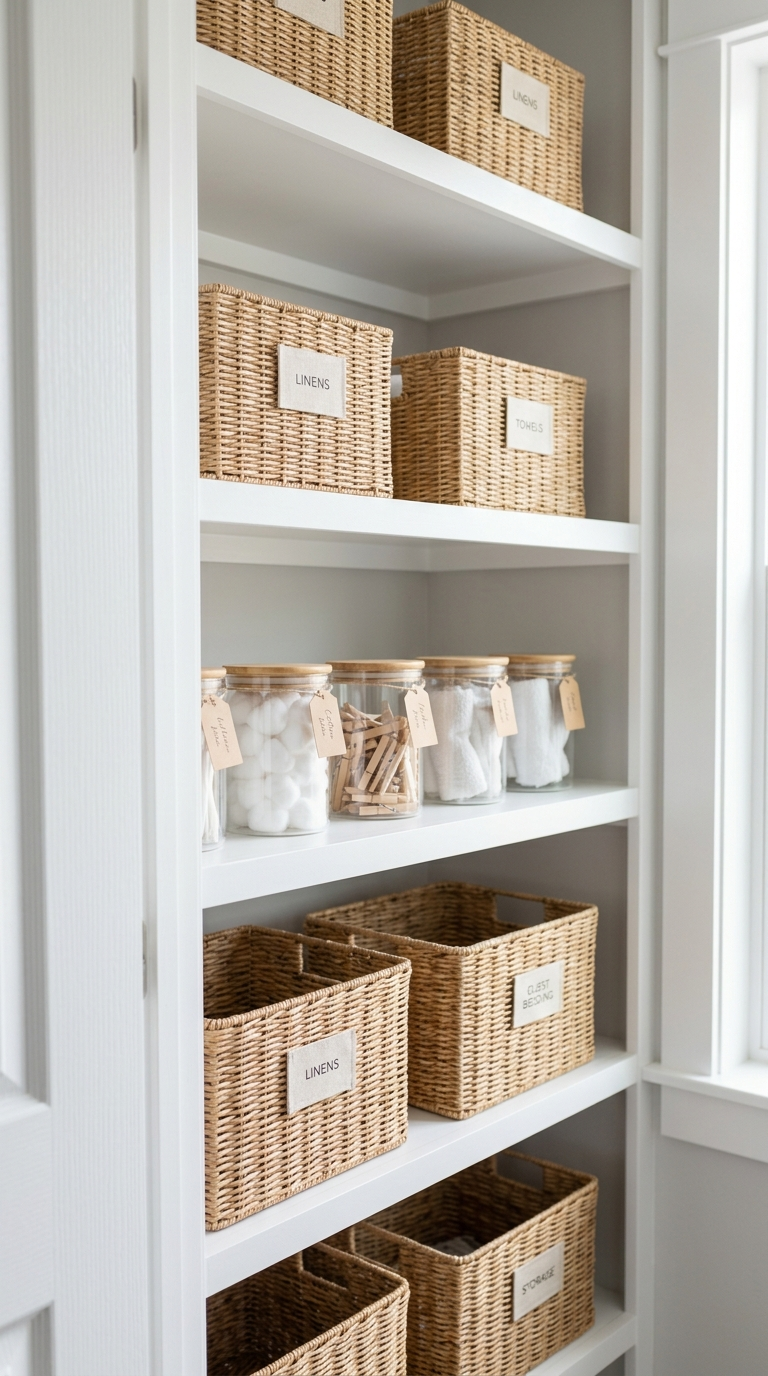
This principle applies throughout the home. In the laundry room, decant powdered detergent into a large glass jar and pour liquid softeners into sleek beverage dispensers. This transforms a chaotic utility space into a beautifully styled room. In the bathroom, remove cotton balls and Q-tips from their flimsy plastic bags and place them in elegant apothecary jars. The reduction of visual noise created by glaring brand logos and varied colors creates a profound sense of order and tranquility in your environment.
13. Organize Books by Color (With Intent)
Organizing a bookshelf can be a daunting task. While organizing alphabetically by author or strictly by genre is highly functional for a vast library, it can sometimes result in a visually chaotic display of varying heights, colors, and spine conditions. For a heavily curated living room bookshelf where aesthetics are as important as function, consider organizing your books by color. This technique, affectionately known as the ‘rainbow bookshelf,’ has gained massive popularity in interior design circles for a good reason.
Grouping books by the color of their spines creates cohesive blocks of color that act almost like large pieces of modern art. It turns a cluttered shelf into a stunning focal point. To prevent it from looking too rigid, mix vertical stacks with horizontal piles. Use the horizontal stacks as platforms to display small decorative objects, framed family photos, or trailing indoor plants. This approach breathes life into the shelving unit, making it feel curated, intentional, and deeply personal while maintaining a strict sense of order.
14. Standardize Your Hangers
Open your closet doors and take a critical look at your hangers. Do you see a chaotic mix of thick plastic tubular hangers in assorted colors, flimsy wire hangers from the dry cleaners, and bulky wooden hangers? This mismatched collection creates massive visual clutter and physically wastes an enormous amount of space. One of the absolute fastest, most impactful, and relatively inexpensive upgrades you can make to your bedroom organization is to switch to a single, standardized style of hanger for your entire wardrobe.
Slim, velvet-flocked hangers are universally recommended by professional organizers. Their ultra-thin profile allows you to fit up to thirty percent more clothing on the same rod compared to thick plastic hangers. Furthermore, the velvet texture prevents silky blouses and wide-necked sweaters from slipping off and ending up in a wrinkled heap on the floor. The uniform look of matching hangers instantly elevates the aesthetic of your closet, making it look like a high-end boutique rather than a messy storage unit.
15. The ‘Basket’ Secret for Open Shelving
Open shelving in living rooms, home offices, and bathrooms looks gorgeous in photographs, but in reality, it is incredibly difficult to keep it looking neat. Not everything we own is beautiful enough to be put on display. The secret to making open shelving work without driving yourself crazy is the strategic use of baskets and decorative bins. Baskets are the ultimate organizational weapon; they hide a multitude of sins while adding wonderful texture, warmth, and style to a room.
Use large woven seagrass or rattan baskets on the bottom shelves to hide bulky items like children’s toys, extra throw blankets, or ugly electronic accessories. Use smaller, structured fabric bins or elegant leather boxes on higher shelves to corral loose paperwork, charging cables, or craft supplies. By mixing beautiful display items—like books, sculptures, and plants—with concealing baskets, you achieve the perfect balance of form and function. Your space looks effortlessly styled, yet it remains highly practical for everyday living.
16. Schedule Routine Seasonal Purges
Finally, it is vital to understand that home organization is not a one-and-done event; it is an ongoing, dynamic lifestyle process. Your life changes, your hobbies evolve, your children grow, and your home needs to adapt to those changes. To prevent clutter from quietly creeping back into your life, you must schedule routine, dedicated purging sessions. The change of the seasons provides the perfect natural rhythm for this maintenance.
In the spring, go through your winter coats, heavy boots, and holiday decorations. If there are items you did not use at all during the preceding season, seriously consider donating them. In the fall, do the same for your summer wardrobe, beach gear, and outdoor toys. Set a weekend aside twice a year to do a comprehensive walk-through of your entire home, opening every drawer and assessing every shelf. This systematic, scheduled approach ensures that your home remains perfectly curated, highly functional, and a true sanctuary of peace for years to come.
Discover 12 whimsical DIY home projects that transform your living space into a magical sanctuary. From fairy-lit reading nooks to enchanted garden decors.
Discover 15 cozy and rustic balcony ideas to transform your small outdoor space into a relaxing retreat. Maximize your tiny balcony with these top decor tips!
Discover how to turn a cramped balcony into a cozy, rustic, and whimsical retreat. Explore creative DIY projects, vertical gardens, and magical lighting ideas.
Discover enchanting DIY projects to turn your small balcony into a magical retreat. Learn how to craft whimsical seating, fairy light canopies, and more.
Turn your tiny balcony into a magical fairy garden with these whimsical DIY ideas! Explore creative, budget-friendly ways to maximize your small outdoor space.