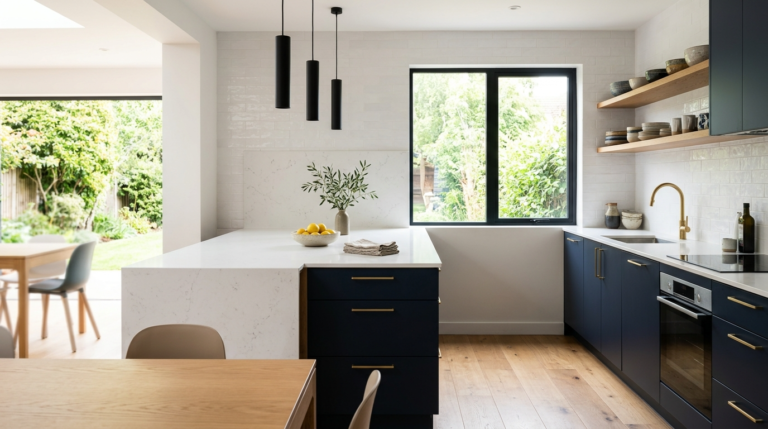

There is something about a rustic kitchen that instantly makes a house feel like a home. The warm wood tones, the soft glow of pendant lighting, the worn textures of stone and iron — these details tell a story of comfort and togetherness. If your kitchen and dining area feels a little too sterile or disconnected, it might be time to lean into a cozier, more rustic aesthetic. Below are twelve ideas that will help you transform your kitchen and dining space into the heart of your home, one thoughtful detail at a time.
1. Bring In a Reclaimed Wood Dining Table
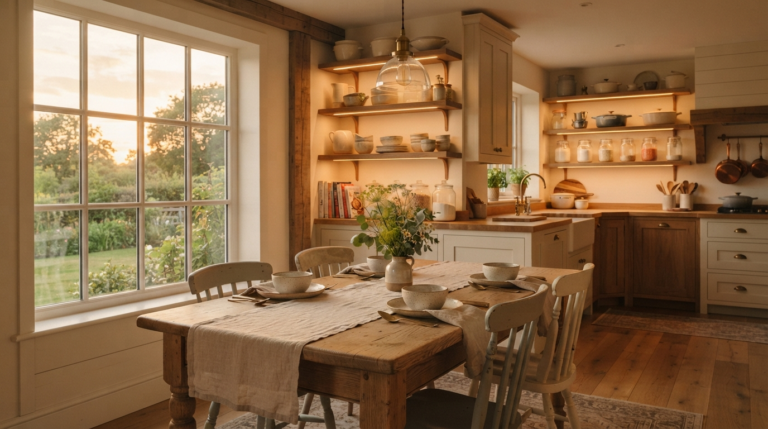
Nothing anchors a rustic dining space quite like a solid reclaimed wood table. The visible grain, knots, and imperfections tell a story that mass-produced furniture simply cannot replicate. Look for tables made from oak, pine, or walnut with a natural or lightly distressed finish. Pair the table with mismatched wooden chairs or a long bench for an eclectic, lived-in feel. If you have the space, consider a farmhouse-style trestle table that can comfortably seat extended family during holiday gatherings. The beauty of reclaimed wood is that every mark and knot adds character rather than detracting from it, making the table a true conversation piece.

2. Layer in Warm, Ambient Lighting
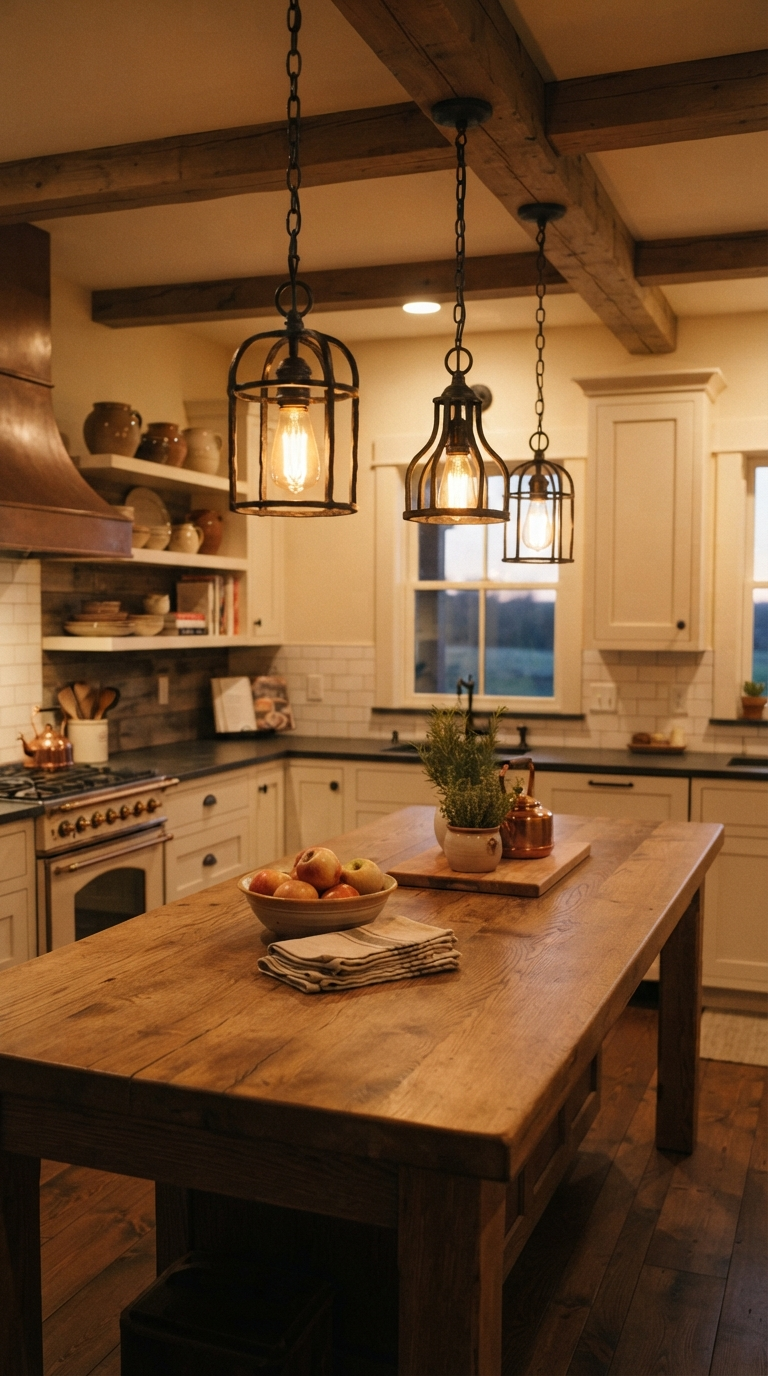
Overhead fluorescent lighting is the enemy of coziness. Swap it out for warm-toned pendant lights hung low over your dining table or kitchen island. Wrought iron chandeliers, woven rattan pendants, or vintage-style Edison bulb fixtures all add instant rustic charm while casting a soft, golden glow across the room. Consider layering your lighting with under-cabinet strips, a statement chandelier, and a few strategically placed table lamps on open shelving. The goal is to avoid one harsh light source and instead create pools of warm light that make the space feel inviting even after the sun goes down.
3. Add Open Shelving With Natural Materials
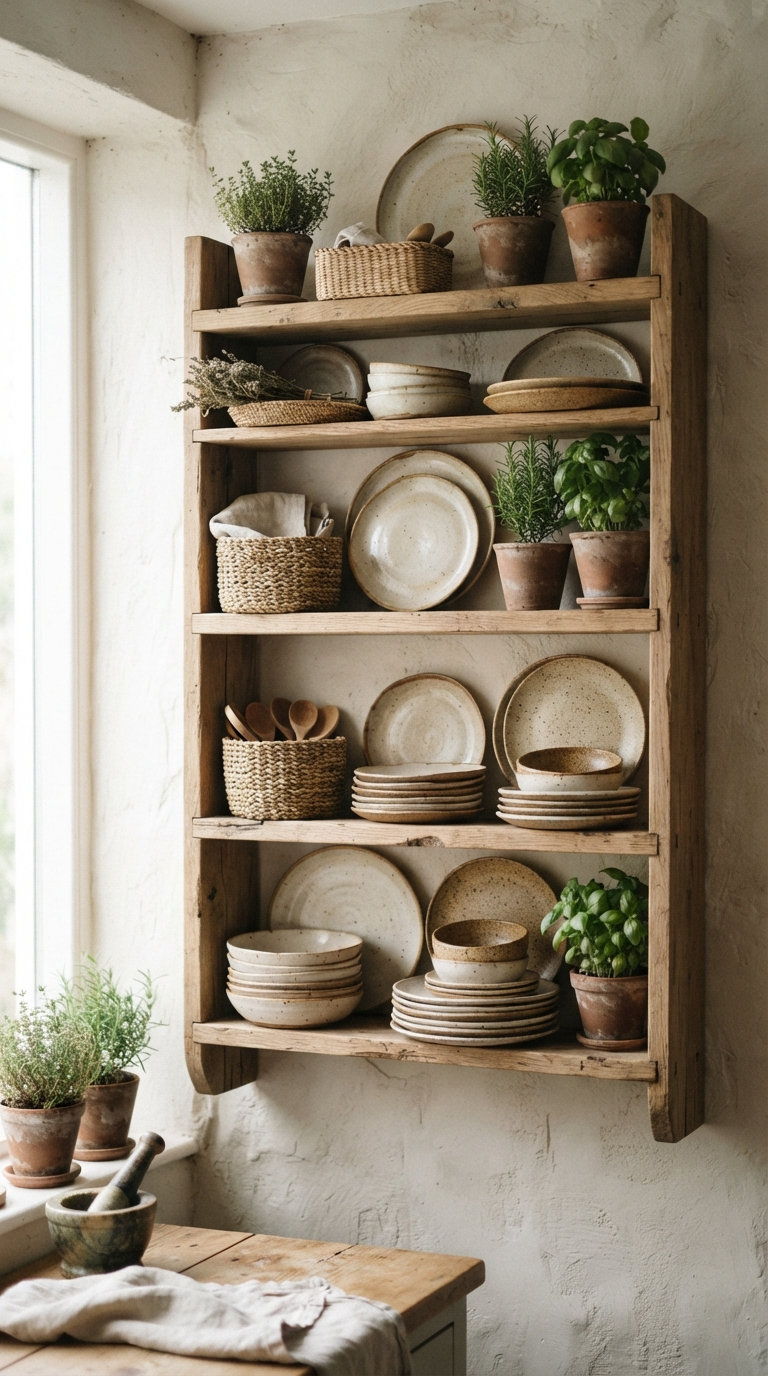
Open shelving crafted from raw or lightly stained wood instantly softens a kitchen and gives you the chance to display your favorite ceramic dishware, woven baskets, and potted herbs. Unlike closed cabinetry, open shelves keep the eye moving and prevent the room from feeling boxed in. To keep the look cohesive, choose shelving brackets in matte black or aged iron, and group your items by color or texture rather than cramming every shelf full. A few carefully chosen pieces will always look more intentional than a crowded display.
4. Incorporate Textured Textiles
Soft textures go a long way in making a kitchen and dining area feel warm rather than clinical. Think chunky woven placemats, linen napkins in muted earth tones, and a plaid or checkered tablecloth draped over your farmhouse table. Cushioned dining chairs upholstered in a nubby boucle or a faded floral fabric add another layer of comfort. Even a simple runner rug in a jute or wool blend placed beneath the dining table can soften the whole room and invite people to linger a little longer after the meal is finished.
5. Choose a Farmhouse Sink and Stone Countertops
An apron-front farmhouse sink is one of the most recognizable features of a rustic kitchen, and for good reason — it is both functional and beautiful. Pair it with honed stone or butcher block countertops for a look that feels grounded and timeless. Avoid overly glossy or polished surfaces, which can pull the space back toward a modern feel. Instead, opt for matte finishes that show a bit of natural variation, since these imperfections are exactly what give a rustic kitchen its authentic charm.
- Choose matte black or aged brass fixtures over the sink
- Add a wooden cutting board display on the counter
- Keep countertops mostly clear for an uncluttered, cozy feel
6. Display Vintage-Inspired Dishware
Swap out sleek, modern dinnerware for stoneware plates, hand-thrown pottery mugs, and mismatched vintage glassware. These pieces often have a slightly imperfect, handmade quality that fits beautifully within a rustic setting. Display your favorite pieces on open shelving or inside a glass-front hutch so they become part of the room’s decor even when you are not using them. Thrifted or antique finds work especially well here, since a bit of age and wear only adds to the story each piece tells.
7. Bring the Outdoors In With Greenery
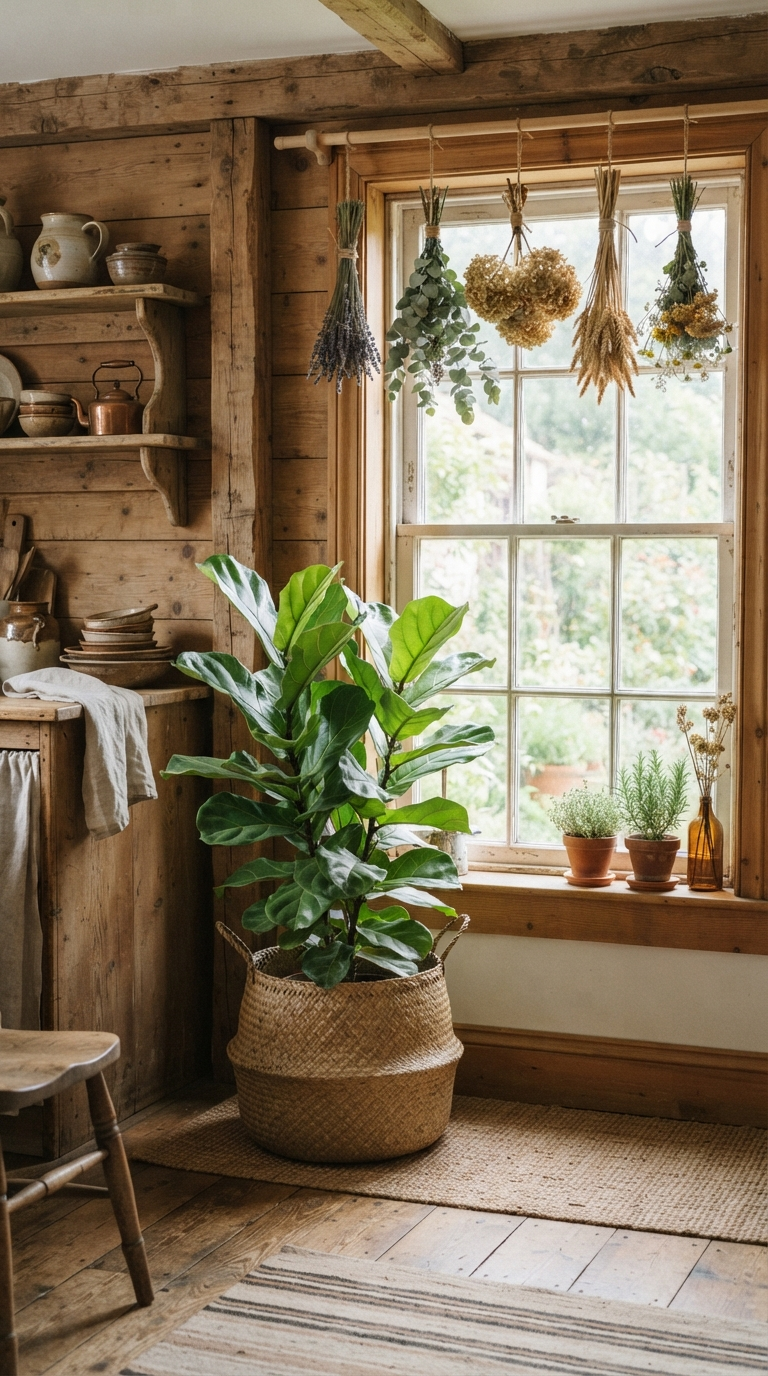
A rustic kitchen feels most alive when it includes a touch of nature. Place potted herbs like rosemary, thyme, and basil along a sunny windowsill, or hang a few dried floral bundles from an exposed wooden beam. A large leafy plant in a woven basket near the dining table adds both color and texture. These small green touches soften hard surfaces and bring a sense of freshness that pairs beautifully with warm wood tones and natural materials throughout the space.
8. Use a Statement Wood Beam or Ceiling Detail
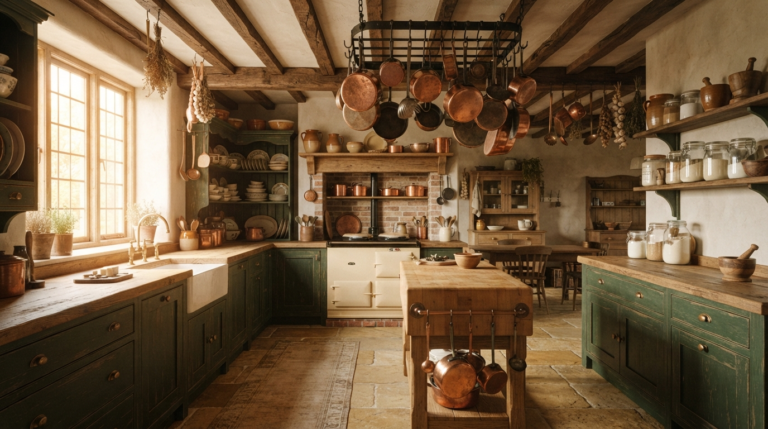
If your budget and structure allow, exposed wood beams across the ceiling can transform an ordinary kitchen into a true rustic retreat. Even faux beams made from lightweight wood can achieve a similar effect at a fraction of the cost. Beams draw the eye upward and add architectural interest that most kitchens are missing. Pair them with a whitewashed or shiplap ceiling for contrast, allowing the wood tones to stand out even more against the lighter backdrop.
9. Create a Cozy Breakfast Nook
A built-in breakfast nook with cushioned bench seating is one of the coziest additions you can make to a rustic kitchen. Tuck it into a corner near a window, add a small round or rectangular table, and pile on soft cushions and a throw blanket for chilly mornings. This little nook becomes the perfect spot for a quiet cup of coffee or a casual weekday breakfast, and it adds a sense of intimacy that a large dining table sometimes lacks.

10. Warm Up the Walls With Natural Tones
Skip the stark white walls in favor of warm neutrals like terracotta, soft clay, muted sage, or creamy beige. These colors work as a gentle backdrop that lets your wood furniture and natural textures take center stage. If you want to add even more depth, consider a lower half-wall of shiplap or beadboard painted in a slightly darker tone than the upper walls, which adds dimension without overwhelming the room.
11. Add Iron and Blackened Metal Accents
Wrought iron and blackened metal hardware add just enough contrast to keep a rustic kitchen from feeling too soft or one-dimensional. Look for cabinet pulls, faucet fixtures, and light fixtures in these darker finishes. A hanging iron pot rack above the kitchen island not only adds visual interest but also gives you practical storage for pots and pans, freeing up cabinet space while reinforcing the farmhouse aesthetic.

12. Finish With Handmade, Personal Touches
The final and perhaps most important step is to make the space feel like yours. Display a handmade ceramic bowl from a local market, a woven basket passed down through your family, or a small collection of vintage cookbooks on the counter. These personal touches are what elevate a rustic kitchen from a design trend to a true reflection of the people who gather there every day. A cozy kitchen is not just about the materials you choose, but about the memories you create within it.
Transforming your kitchen and dining area into a warm, rustic retreat does not happen overnight, but even small changes — a new light fixture, a set of vintage dishware, a cozy breakfast nook — can make a noticeable difference. Take these ideas one at a time, and before long you will have a space that feels less like a functional room and more like the true heart of your home.