The Evolution of the Dramatic Kitchen AestheticFor decades, the interior design world was dominated by the safety of the all-white kitchen. While crisp and bright, these spaces often lacked emotional depth, architectural gravity, and a true sense of individuality. Today, a powerful design shift is underway as homeowners embrace the sophisticated allure of dark, moody, and black culinary spaces. A dark kitchen is an assertive design statement, exuding a sense of quiet luxury, intimacy, and high-end culinary artistry. By stepping away from stark white surfaces, you open the door to a world of deep, saturated tones that make structural elements recede, allowing textures, metallic accents, and lighting to take center stage.Designing a successful dark kitchen requires a sophisticated understanding of balance, materials, and contrast. Without careful curation, a dark space can feel restrictive or gloomy. However, when executed correctly, it becomes an inviting, theatrical centerpiece of the home. This comprehensive trend forecast details the foundational movements shaping dark kitchen design, providing actionable insights to execute this bold look flawlessly.
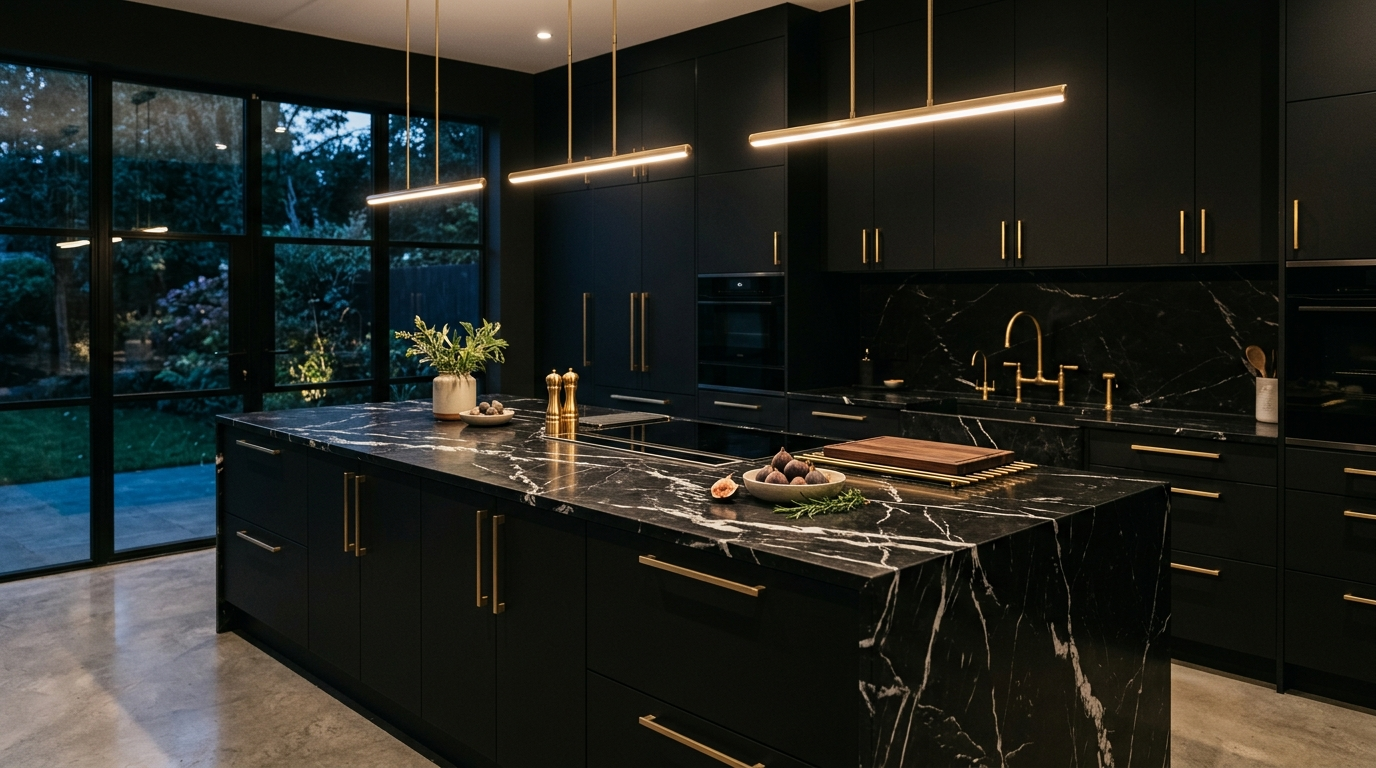
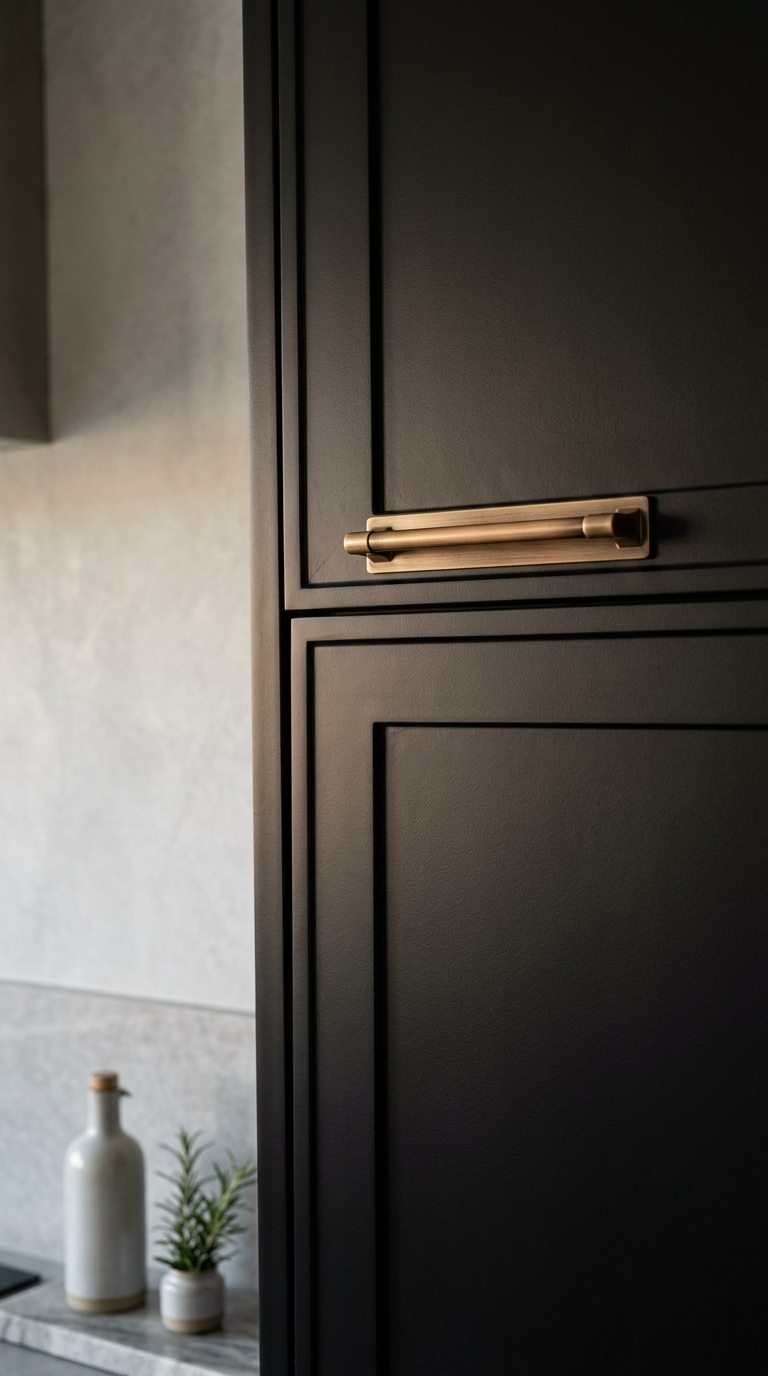
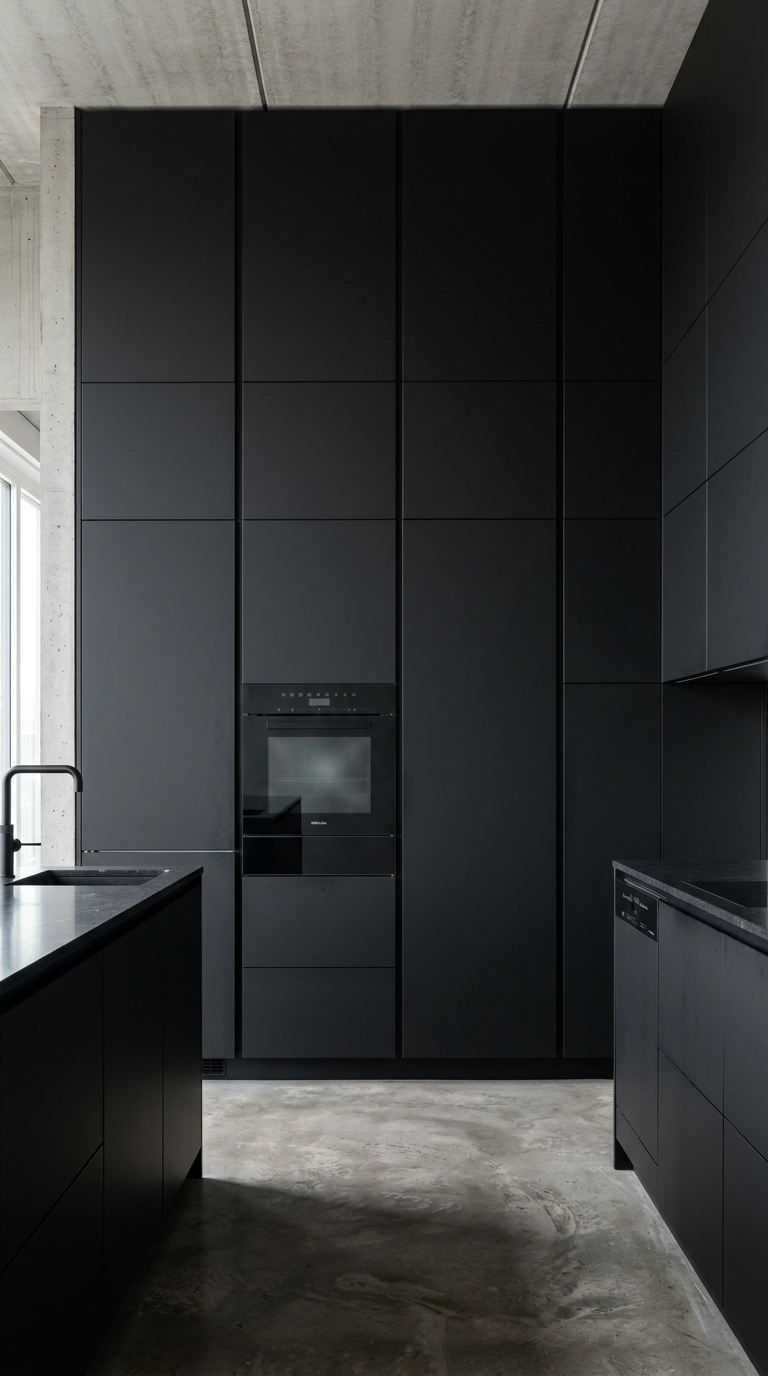
Trend 1: Matte Black Cabinetry with Textural VariationsThe foundation of any dark kitchen rests heavily on its cabinetry, and currently, matte finishes are leading the industry over traditional high-gloss options. Matte black and deep obsidian surfaces absorb light rather than reflecting it, creating an incredibly smooth, velvety visual texture that feels undeniably modern. However, a solid wall of completely smooth black cabinetry can risk looking monolithic. To counter this, forward-thinking designers are introducing subtle tactile variations to bring depth and movement to the space.Incorporating micro-shaker profiles, slim-line reeded timber panels, or wire-brushed oak stained to a deep charcoal hue allows natural light to catch the delicate ridges and grain structures. This interplay of texture breaks up the expansive dark surfaces while preserving the overall moody aesthetic. Furthermore, advanced modern matte laminates and specialized anti-fingerprint coatings ensure these dark cabinets remain pristine, resisting the oils and smudges that historically made dark kitchens challenging to maintain over time.
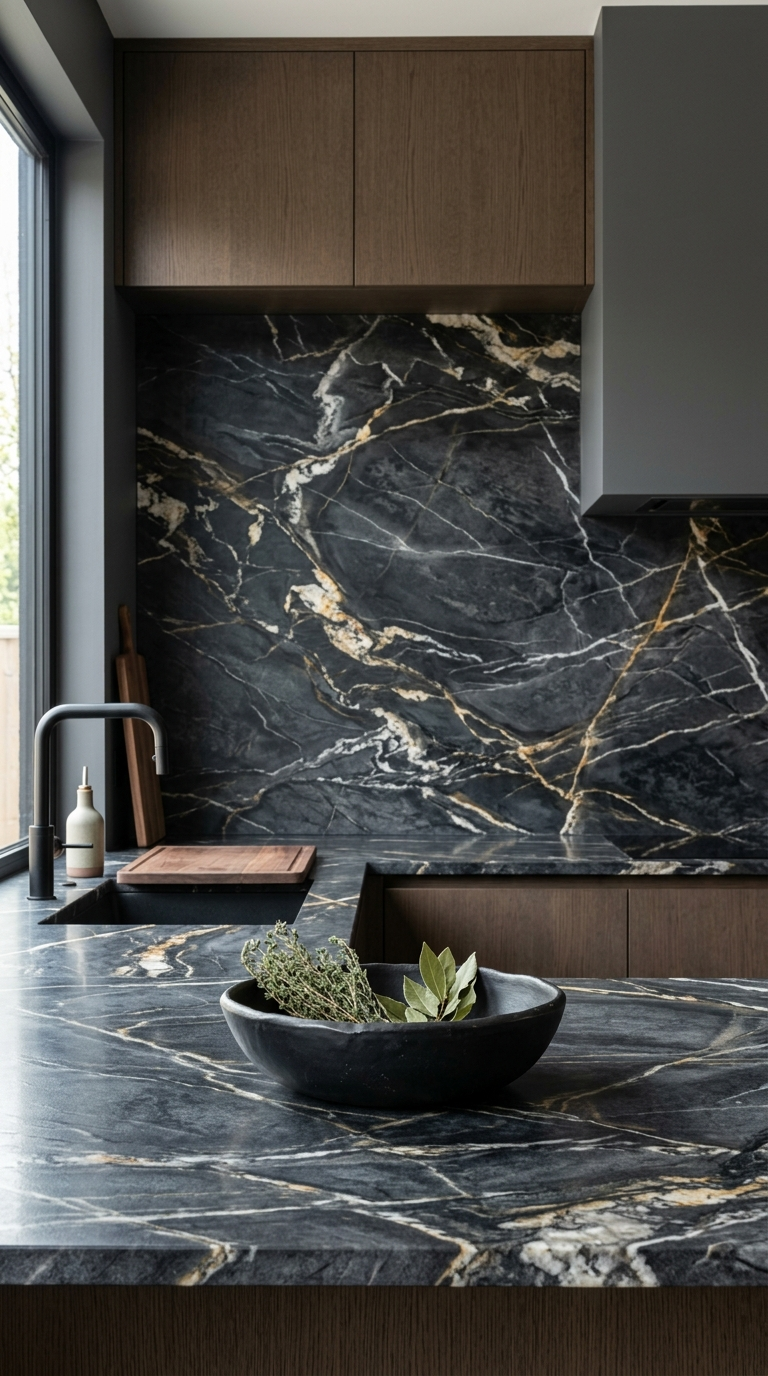
Trend 2: Deep Charcoal and High-Contrast Quartzite BacksplashesIn a dark kitchen, the countertop and backsplash function as the artistic canvas that binds the entire room together. The current trend moves completely away from basic tile configurations toward dramatic, full-slab stones that span from the counter all the way up to the upper cabinets or ceiling. Homeowners are opting for rich, deep charcoal quartzites, dark soapstones with natural white veining, or striking black marbles like Nero Marquina characterized by bold, erratic crystalline lightning streaks.These high-contrast veins act as natural art pieces, cutting through the dark surroundings to bring motion and energy into the culinary space. Soapstone is particularly favored for its beautiful, silken tactile quality and its unique ability to develop a rich, dark patina over time. If you prefer a completely dark, monochromatic look, selecting a dark slate or honed absolute black granite with a textured leathered finish provides a tactile contrast against smooth matte cabinets, creating a subtle layer of luxury without relying on bright colors.
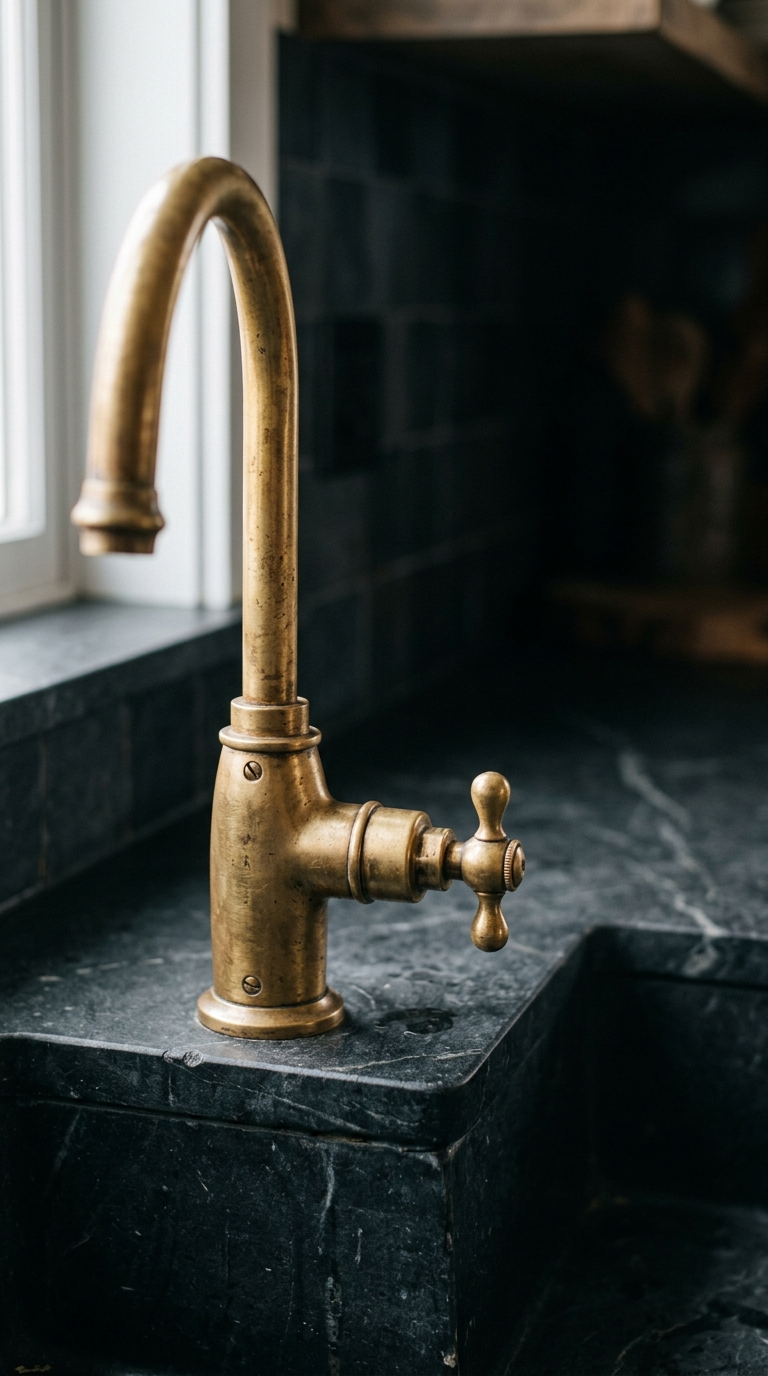
Trend 3: Metallic Accents and Warm Statement HardwareTo prevent a dark palette from feeling somber, you must introduce metallic accents that act as jewelry for the room. The selection of hardware, plumbing fixtures, and lighting trim is critical in warming up dark gray, navy, or black cabinetry. Currently, designers are steering away from polished chrome and bright shiny brass, choosing instead more understated, sophisticated finishes such as brushed bronze, antique unlacquered brass, satin copper, or gunmetal gray.These warmer tones offer a beautiful contrast against deep, moody backdrops. An unlacquered brass faucet will oxidize gently over time, developing a unique character that adds an organic, historic feel to a contemporary kitchen layout. When placing hardware, uniformity is key; match the knurled detailing on your cabinet pulls with the finish of your main faucet and the structural framework of your overhead light fixtures. This meticulous attention to detail creates a cohesive design language that ties the space together effortlessly.
Trend 4: Seamless Integrated Pantries and Concealed AppliancesThe visual impact of a dark kitchen relies heavily on maintaining clean, uninterrupted architectural lines. Standard stainless steel appliances can disrupt a beautifully integrated dark color scheme, breaking the moody atmosphere. The latest luxury trend centers on absolute concealment through custom appliance paneling. Refrigerators, dishwashers, and freezer drawers are completely clad in the exact same matte black or dark stained wood veneer as the surrounding cabinetry, blending perfectly into the background.Similarly, small countertop appliances like coffee makers, blenders, and toasters are housed within integrated breakfast garages or deep walk-in pantries hidden behind secret cabinet-style doors. Large cooking ranges are selected in matte black finishes with matching black enamel cooktops, or induction hobs are installed flush directly into dark porcelain countertops. By rendering the functional mechanics of the kitchen virtually invisible, the room shifts from looking like a standard workspace into an elegant, sophisticated living lounge perfect for entertaining.
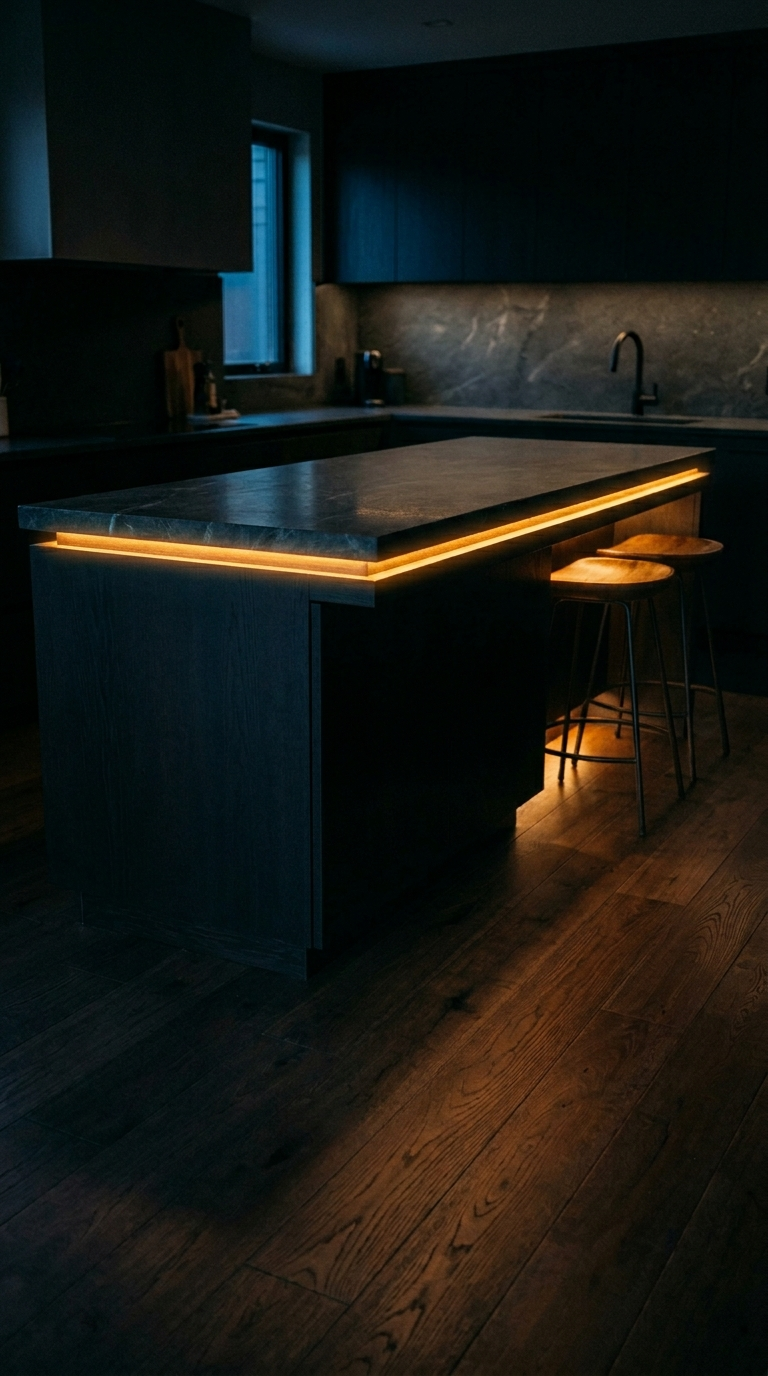
Trend 5: Dramatic Linear and Under-Cabinet Ambient LightingLighting is the ultimate element that can make or break a dark kitchen design. Because dark colors absorb substantial amounts of light, a generic lighting grid will leave corners dark and the center of the room under-illuminated. To counteract this, modern dark kitchens utilize highly strategic, integrated LED lighting solutions. Instead of heavy overhead pendants, designers are leaning toward slim, minimalist linear LED suspension lights over islands to provide clear task lighting while maintaining open sightlines.Crucially, extensive architectural accent lighting is integrated directly into the millwork. Recessed LED light strips installed beneath the edge of countertops create a spectacular floating effect for kitchen islands. Under-cabinet lighting illuminates the full-slab stone backsplashes, highlighting the natural stone veining and casting a warm glow across the workspace. Installing soft LED lighting inside glass-front upper cabinets displaying dark ceramic dinnerware adds exceptional depth, ensuring the kitchen feels warm, layered, and incredibly inviting after nightfall.
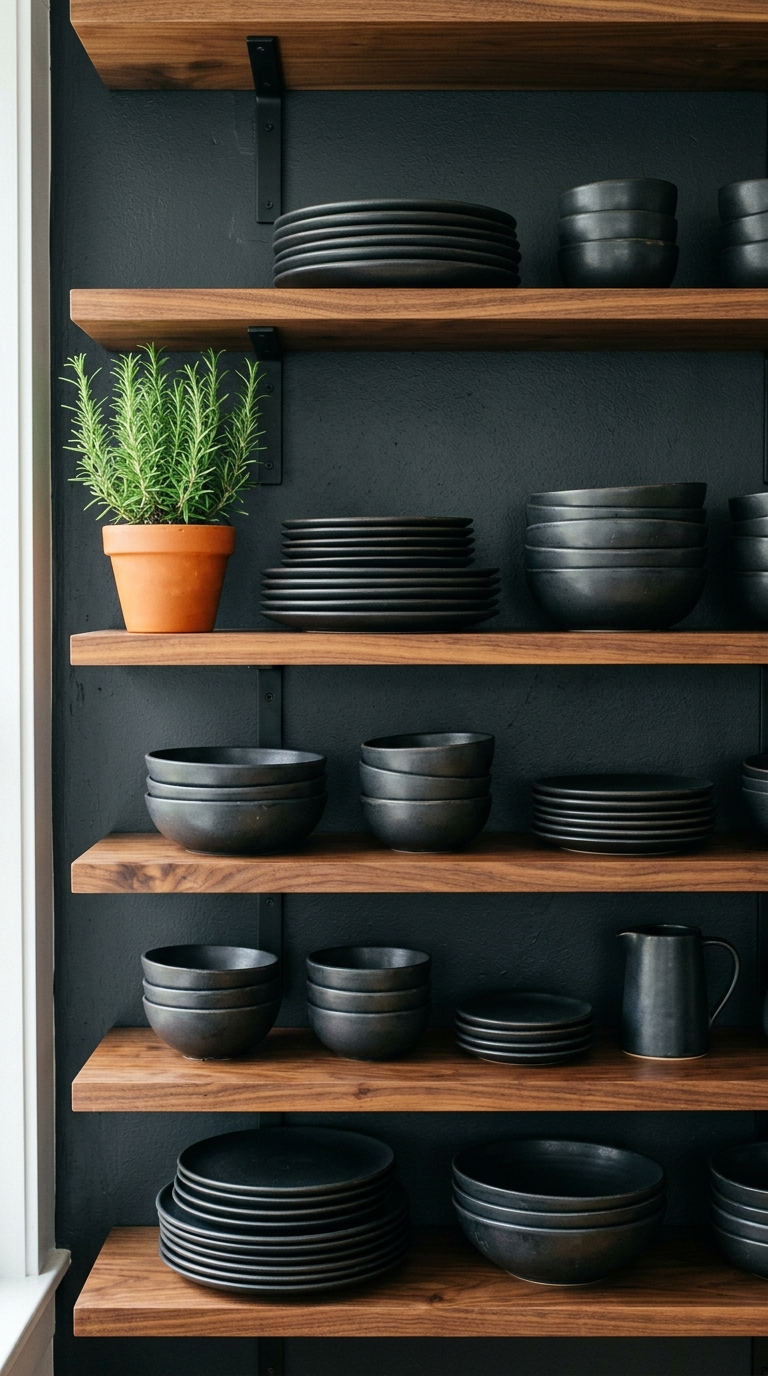
Trend 6: Integrating Rich Organic Elements and Earthy UndertonesTo successfully ground a dark kitchen and make it feel truly lived-in, you must balance the dark surfaces with rich organic materials. Incorporating natural wood tones—such as a warm walnut island base, exposed rustic oak ceiling beams, or open wooden shelving—softens the industrial edge of matte black cabinetry. These warm timber surfaces introduce an earthy element that makes the kitchen feel grounded and connected to nature.Beyond timber, introducing tactile organic materials like natural clay pottery, heavy linen tea towels, and hand-knotted runner rugs adds essential warmth. Introduce small potted herbs or a large statement vase filled with fresh olive branches to bring a vibrant splash of natural color into the space. The contrast of bright green foliage against a deep charcoal or black backdrop is incredibly striking, proving that a dark palette does not mean sacrificing a welcoming, alive atmosphere. By carefully layering these organic materials against your dark surfaces, you achieve a balanced, timeless kitchen design that stands at the pinnacle of modern luxury.
Learn how to expertly design and style a sophisticated black or dark kitchen, including lighting tricks, material choices, and balancing moody aesthetics.
Discover upcoming design trends for dark and black kitchens, featuring luxury matte textures, rich metallic accents, and dramatic integrated lighting profiles.
Elevate your home with these 15 expert minimalist ideas for a sleek kitchen and dining space. Discover how to create a clean, clutter-free, and functional design.
Are you making these small kitchen mistakes? Learn how to avoid layout traps, poor lighting, and wasted vertical space with smart editorial design tips.
Are you struggling with a dysfunctional cooking space? Learn the most common kitchen layout mistakes and practical solutions to maximize your dining area.
Discover the most exquisite kitchen and dining room design trends of the year. Elevate your culinary spaces with our expert premium styling tips today!